
29 modules. One shared client context.
Six systems that hand off to each other. Set a client's market, services and geography once, and every module downstream already knows it — so nothing you run starts from a blank field.
Six systems, in the order you'd actually use them.
Strategy first, then diagnosis, then production, then tracking. The panel is arranged the way the work runs, not the way a feature list gets written.
- Marketing foundation
- 4
- SEO command center
- 7
- Local SEO suite
- 7
Define & diagnose
- Content generation
- 7
- Ad generator
- 5
- Content planner
- 1
Generate & track
Diagnose. Plan. Generate. Track.
The same loop, every client, every week. Each phase feeds the next with real client data rather than a fresh brief.
Phase 01
Diagnose
Connect Search Console, Google Business Profile and GA4. Striking-distance keywords, decaying content and funnel choke points surface on their own.
Phase 02
Plan
Diagnostics become a prioritized roadmap — site structure, topical authority, link targets — ranked by revenue impact rather than gut feel.
Phase 03
Generate
Blog posts, landing pages, ad campaigns and GBP content, structured against the plan and written in the client's voice.
Phase 04
Track
Rankings, map pack positions, traffic and pipeline status update on the panel. You see what moved, and so does your client.
Strategy before tactics.
Nail the who, the what and the why-you before a dollar gets spent. Everything the rest of the panel produces inherits these answers.
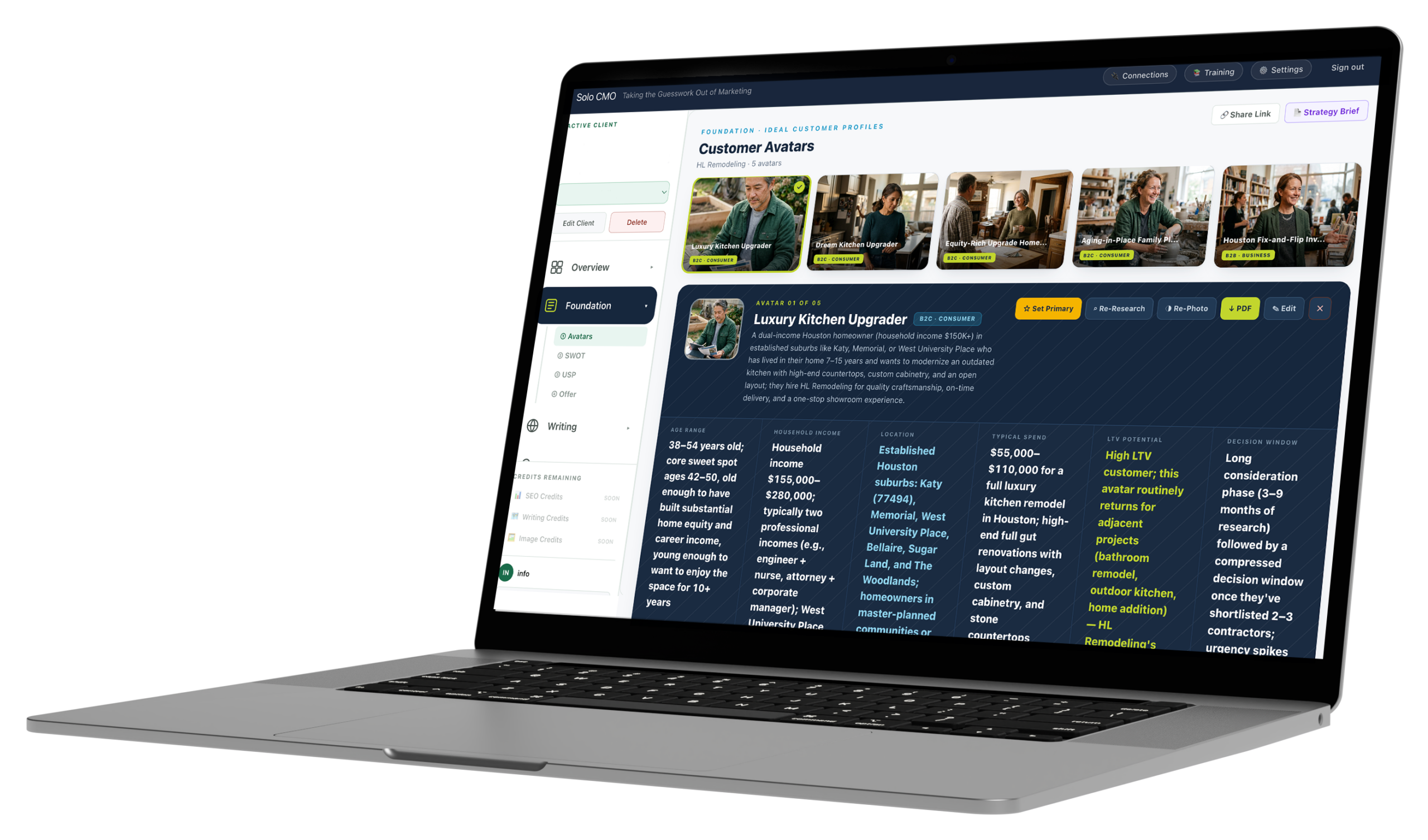
Build the buyer persona for the client's actual market — who calls, what they're worried about, what makes them choose.
SWOT CreatorWhere the client genuinely wins, where they lose, and which of those a marketing budget can move.
USP GeneratorA positioning line that survives contact with competitors, rather than the same three adjectives every local firm uses.
Irresistible Offer GeneratorTurn the positioning into an offer with a reason to act now — the thing ads and landing pages both point at.
Diagnose what's broken, plan what's next.
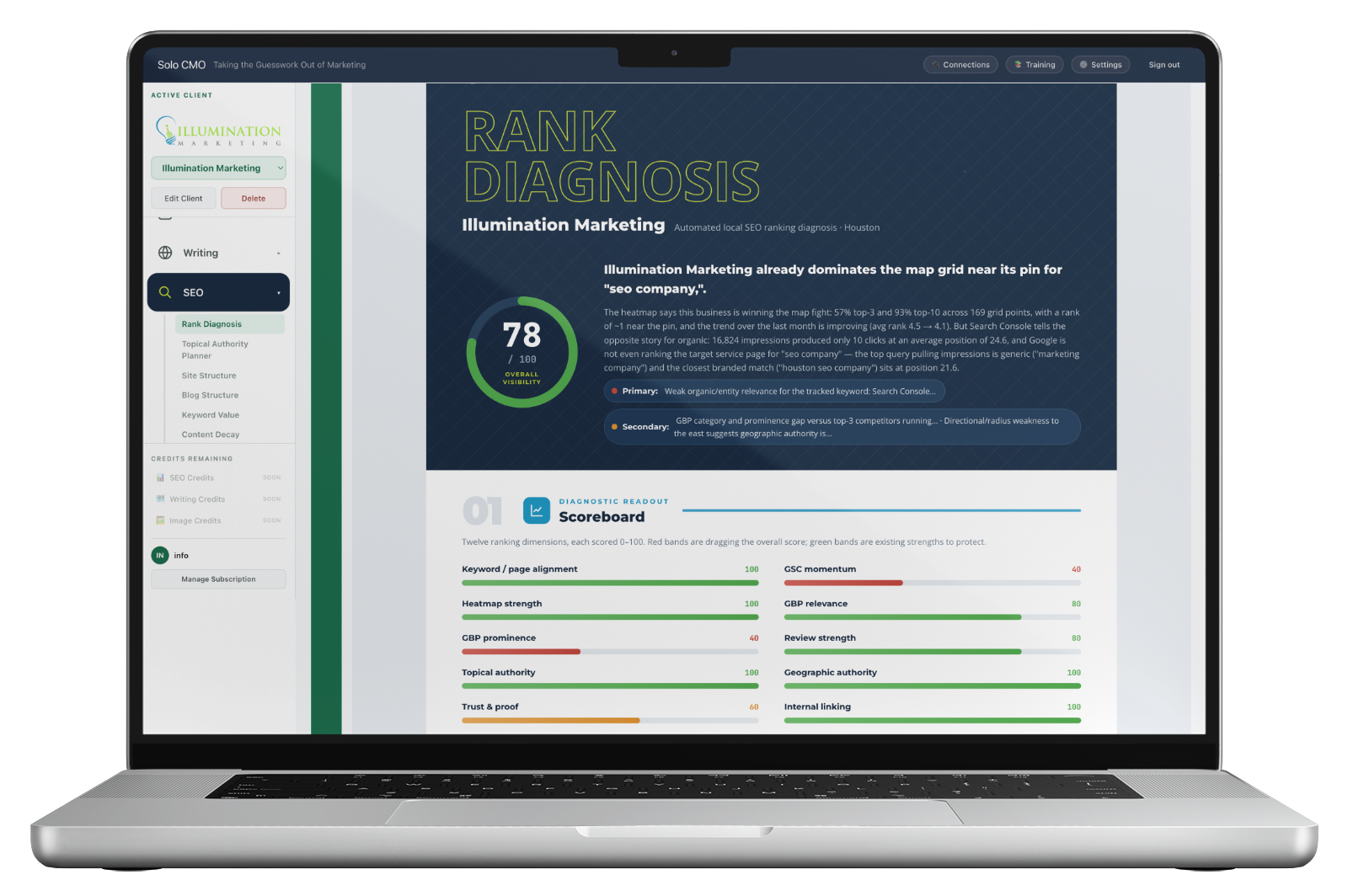
Catch decay before rankings slide, and spend effort where the projected click gain is largest instead of where the keyword list happens to start.
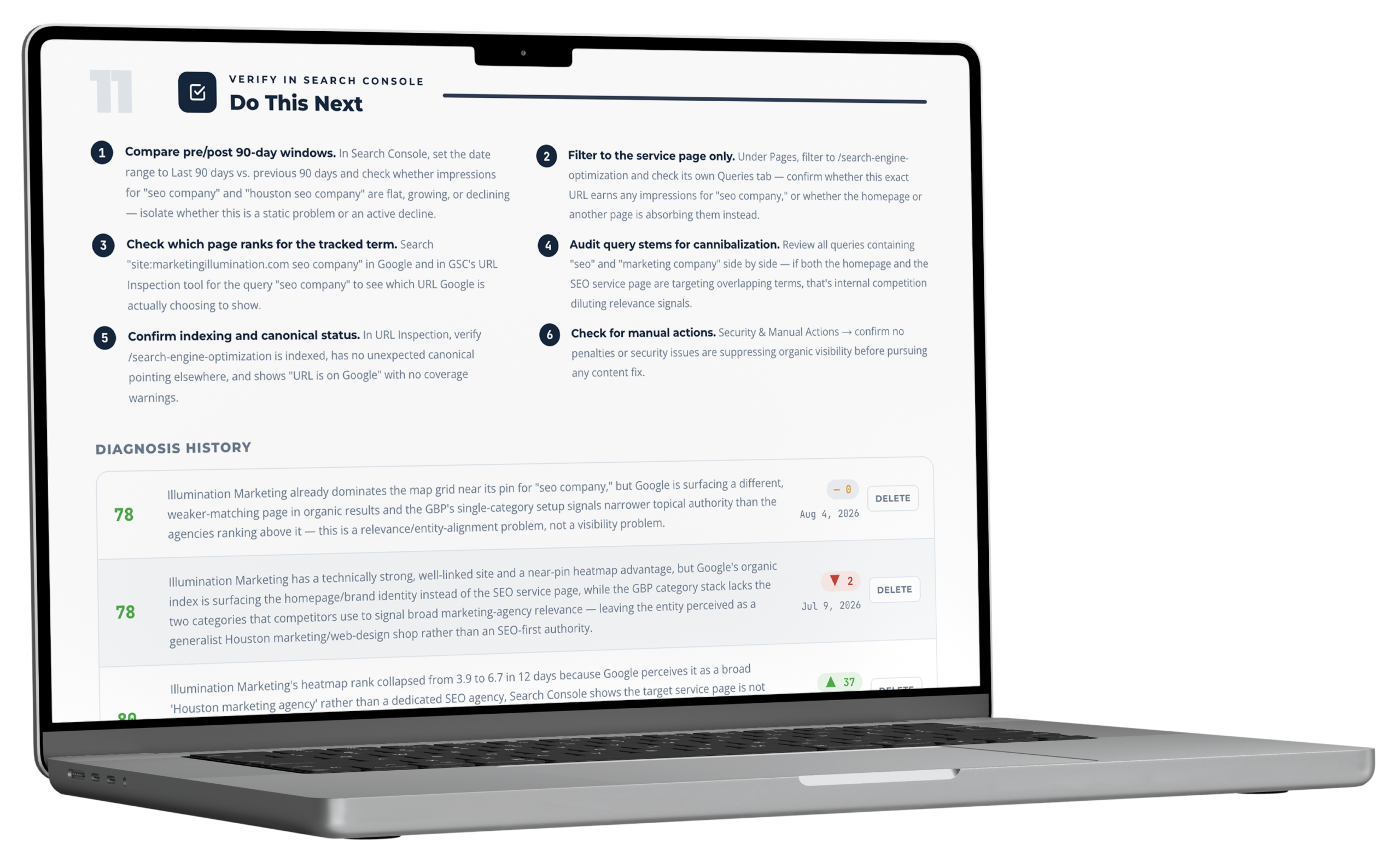
Where every tracked term actually sits, which ones are within striking distance, and what's holding each one back.
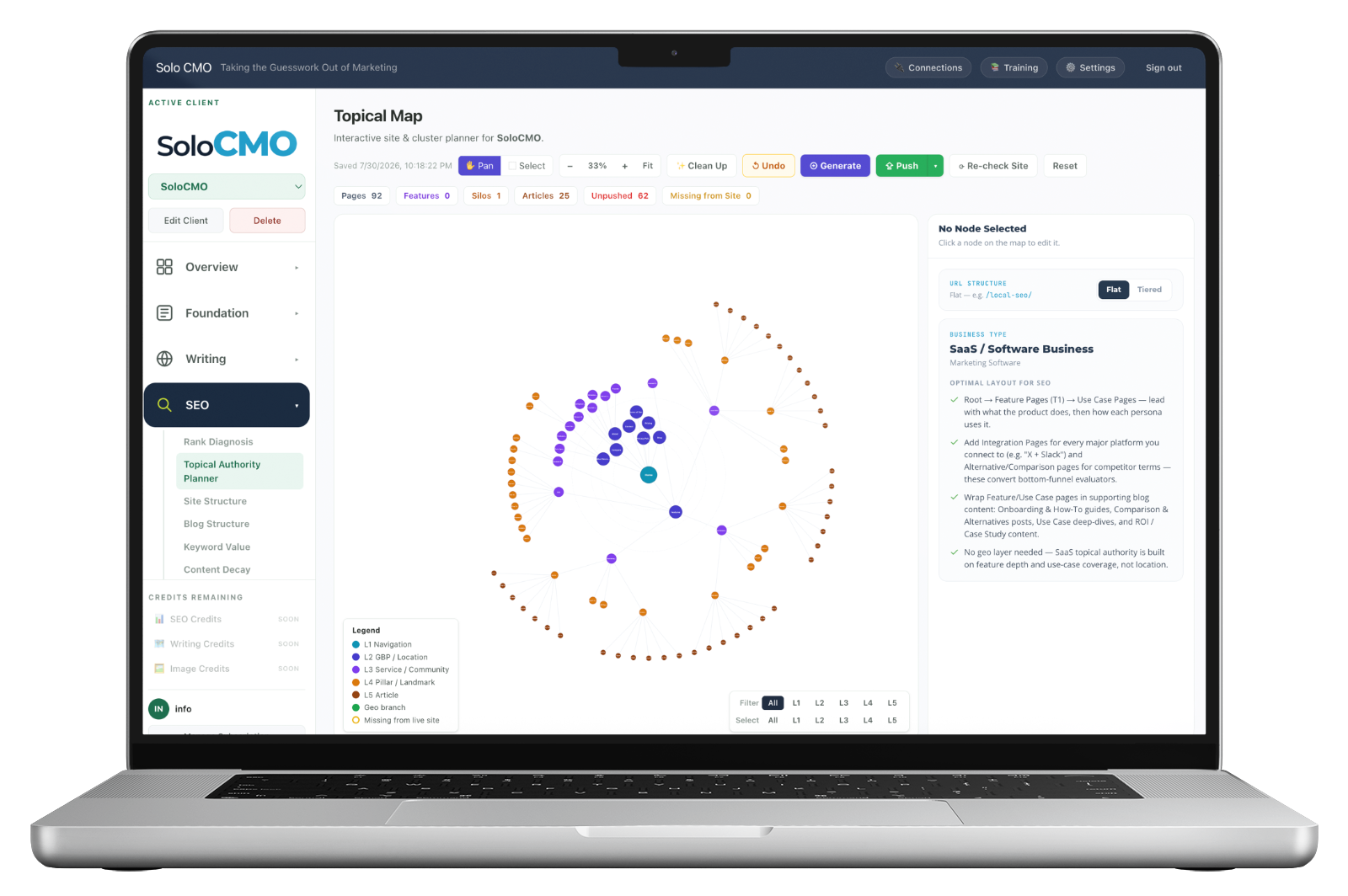
Topical Authority PlannerMap the full topic space for a service and geography, then sequence it so coverage compounds instead of scattering.
Site Structure TrackerThe service, location and industry pages a site should have, against the ones it does — with the gaps prioritized.
Blog Structure TrackerTopic clusters and internal linking laid out as a structure you can see, so supporting posts point somewhere on purpose.
Keyword Value EstimatorWhat a term is worth to this client in revenue, not volume — the number that decides whether it earns a page.
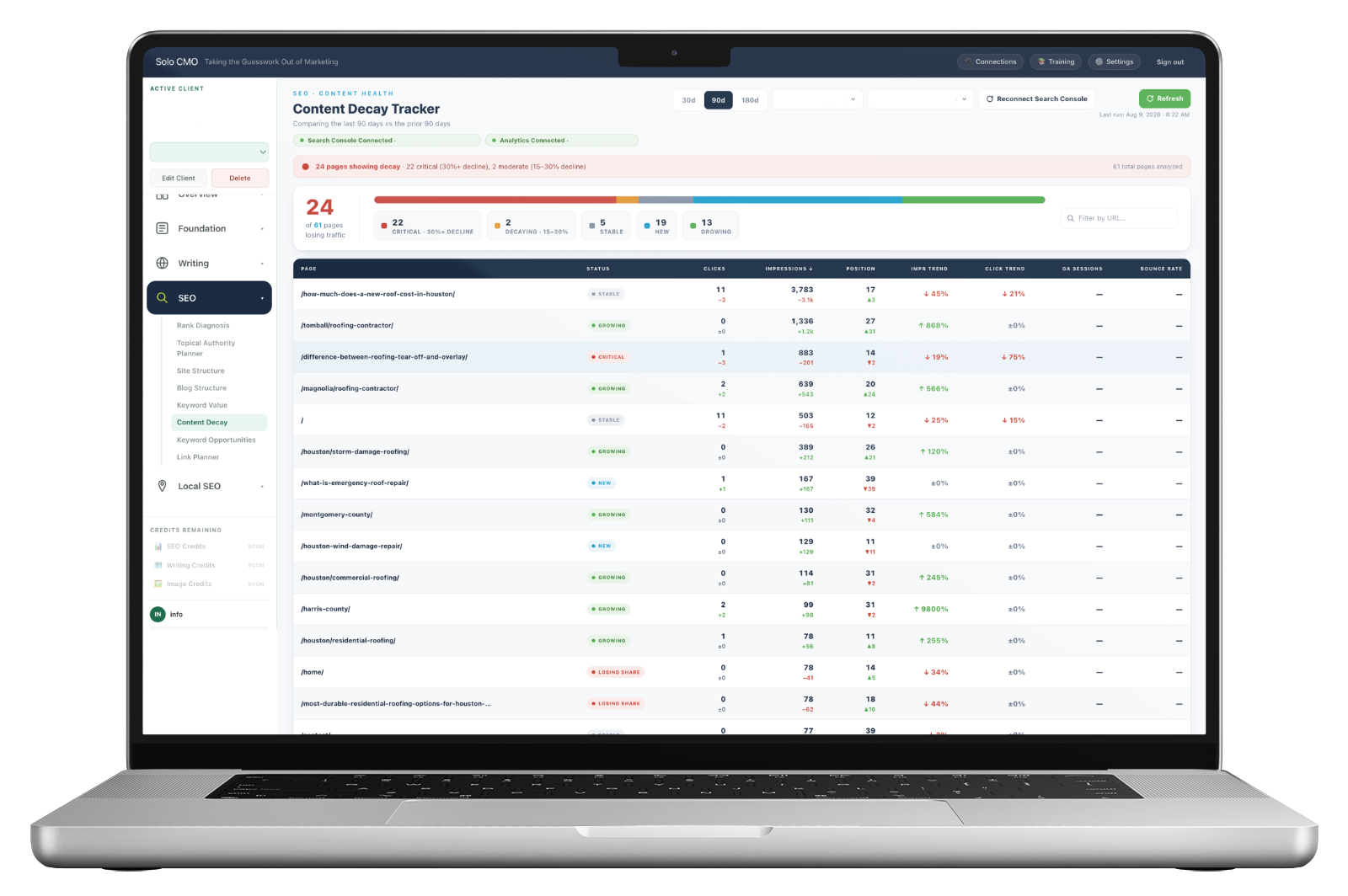
Content DecayPages losing impressions and position before the traffic drop shows up in a monthly report.
Keyword OpportunitiesFind high-value keyword gaps and ranking opportunities across your site, so every next move is backed by search data.
Link PlannerPlan link targets with anchor-text ratios governed across the whole profile, so the mix stays defensible as it grows.
The work that makes local phones ring.
Plumbers, roofers, salons, contractors. Map pack position, Google Business Profile condition and review flow — managed rather than checked on.
Business details, categories, services and hours managed from the panel through a connected profile.
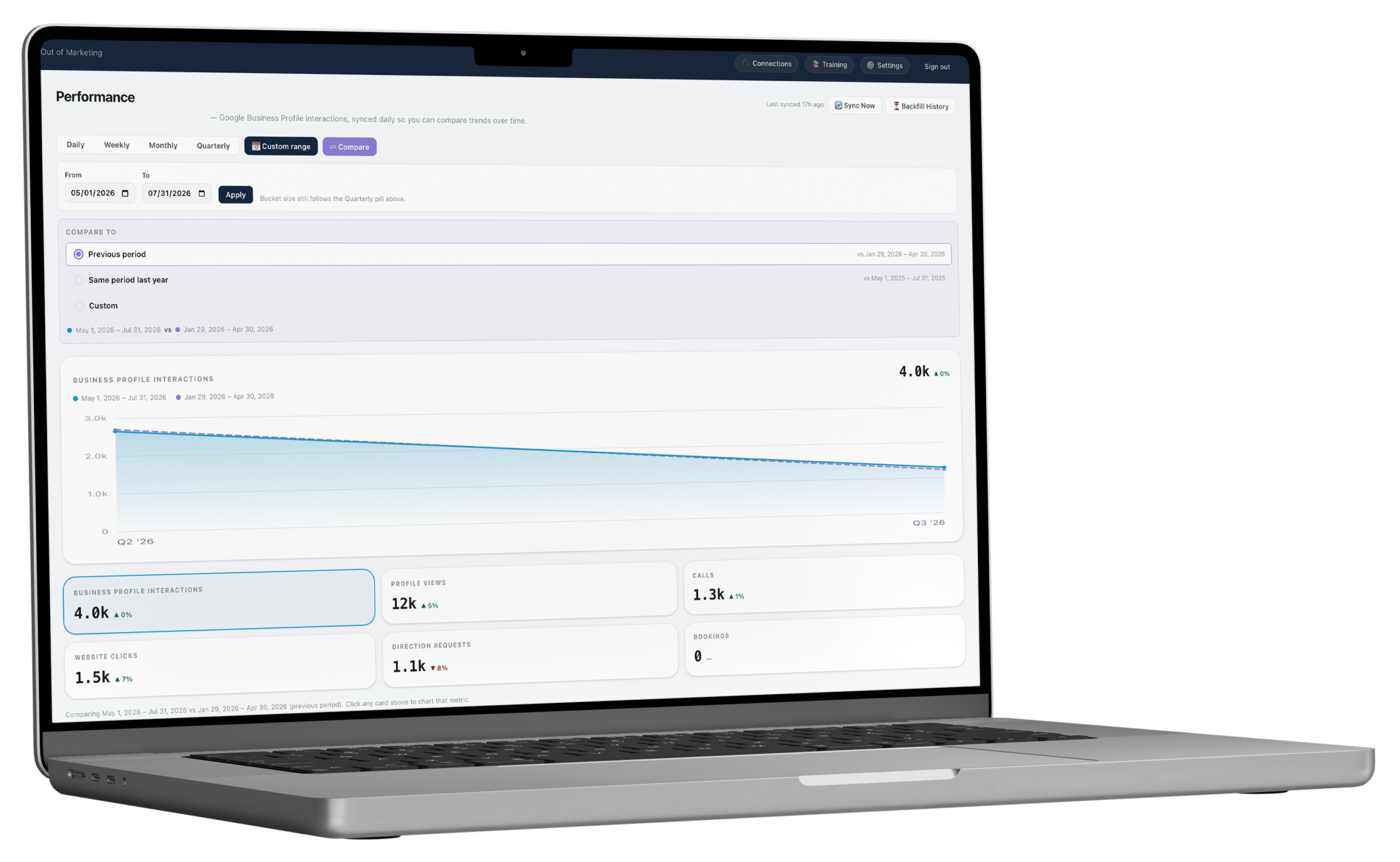
GBP Performance TrackerCalls, direction requests, searches and views over time — profile performance as a trend, not a screenshot.
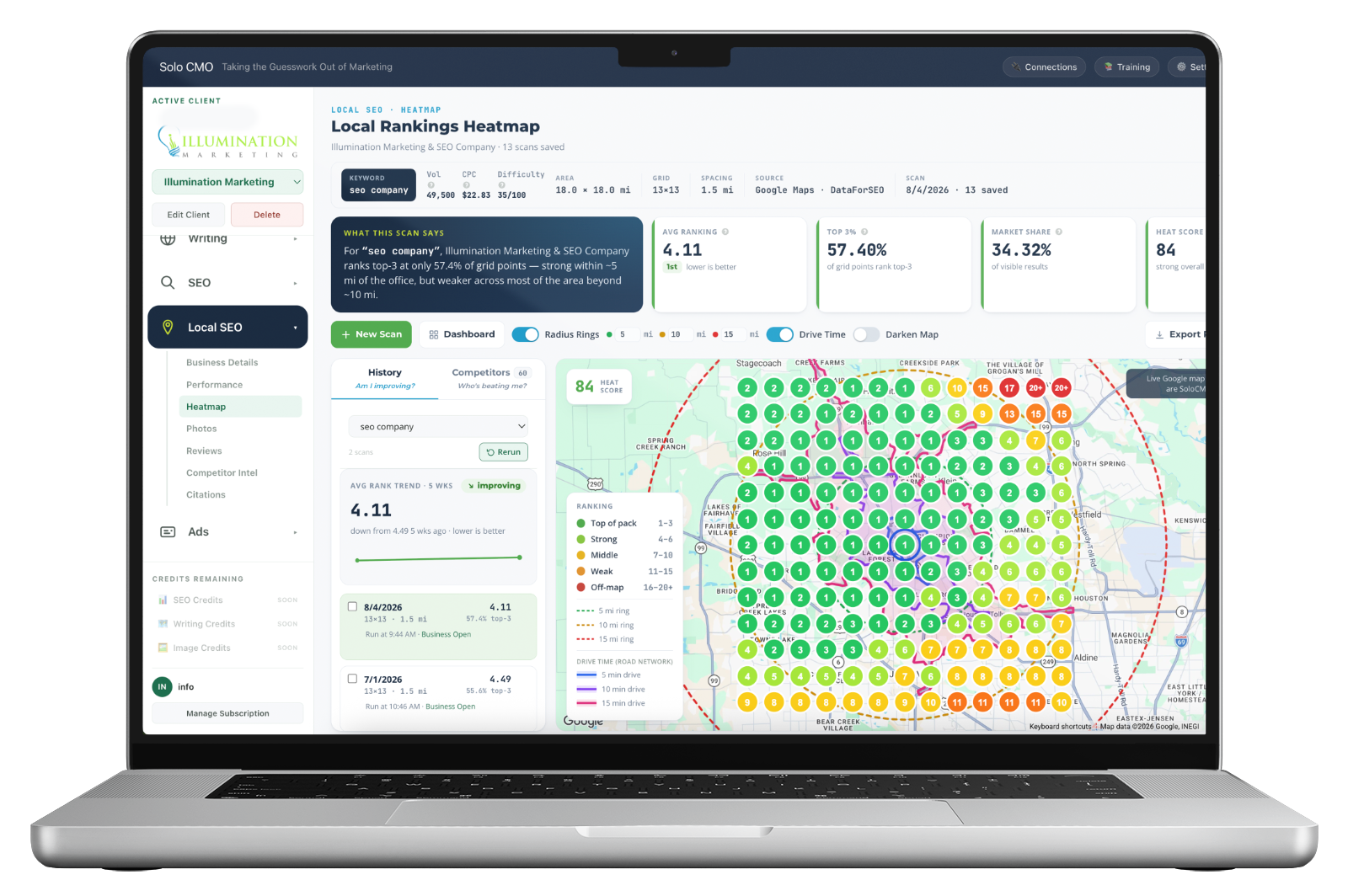
Local HeatmapMap pack position across a grid of the service area, so you can see how far the client ranks from their own front door.
GBP Photo ManagerKeep photos current and posting consistently, without logging into a separate profile for every client.
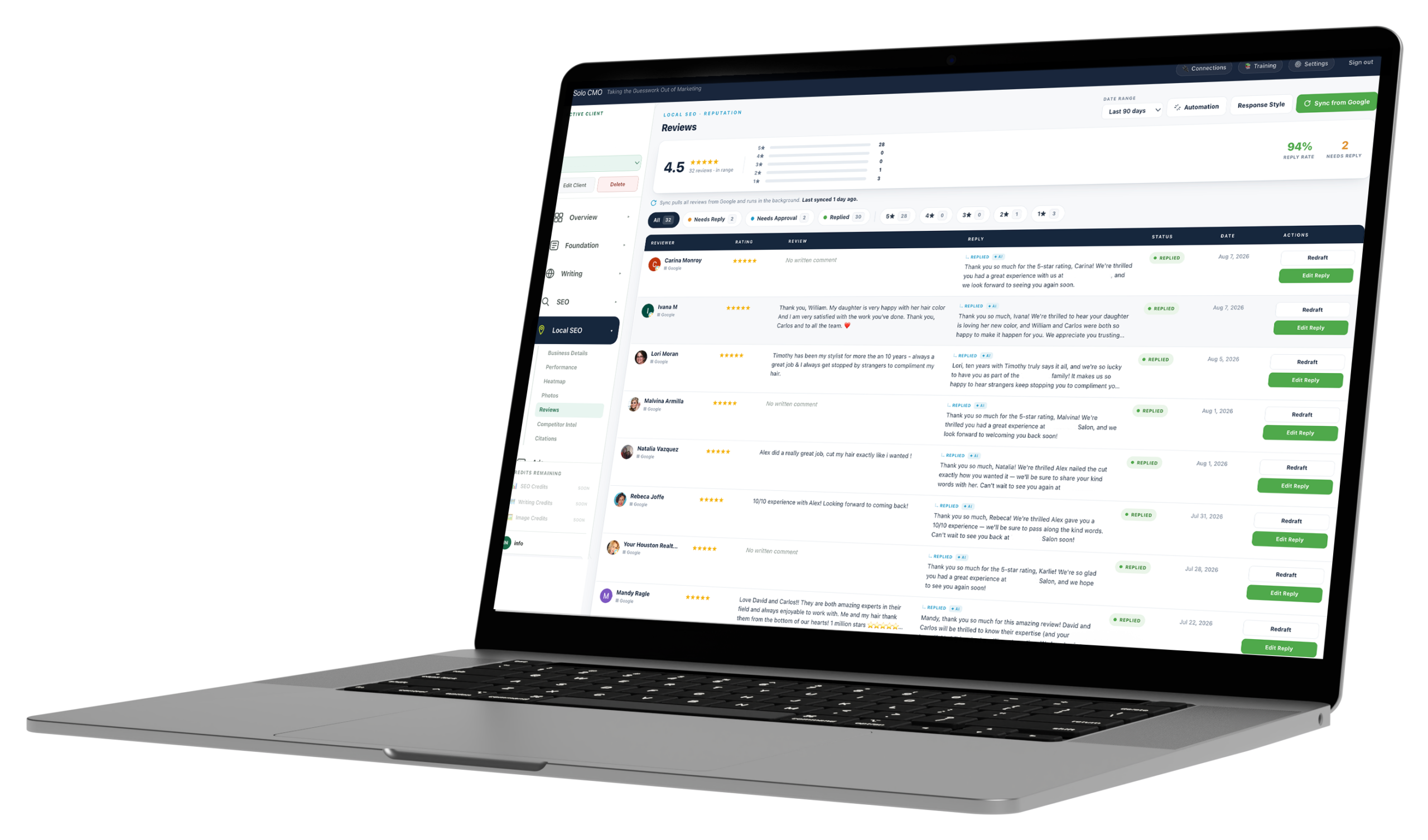
Review ManagerNew reviews, response status and rating movement in one queue across the roster.
Local Competitor IntelWho's holding the map pack in this geography, what their profile looks like, and where the gap is.
GBP Profile OptimizerAudit a profile against what actually correlates with map pack position, and get the fixes in priority order.
GBP Posting ToolCreate, schedule, and manage Google Business Profile posts across clients, so local content stays consistent.
Pages built to rank, not to fill a calendar.
Every asset is structured against the keyword targets and the plan the SEO system produced — and written against the foundation, so it sounds like the client.
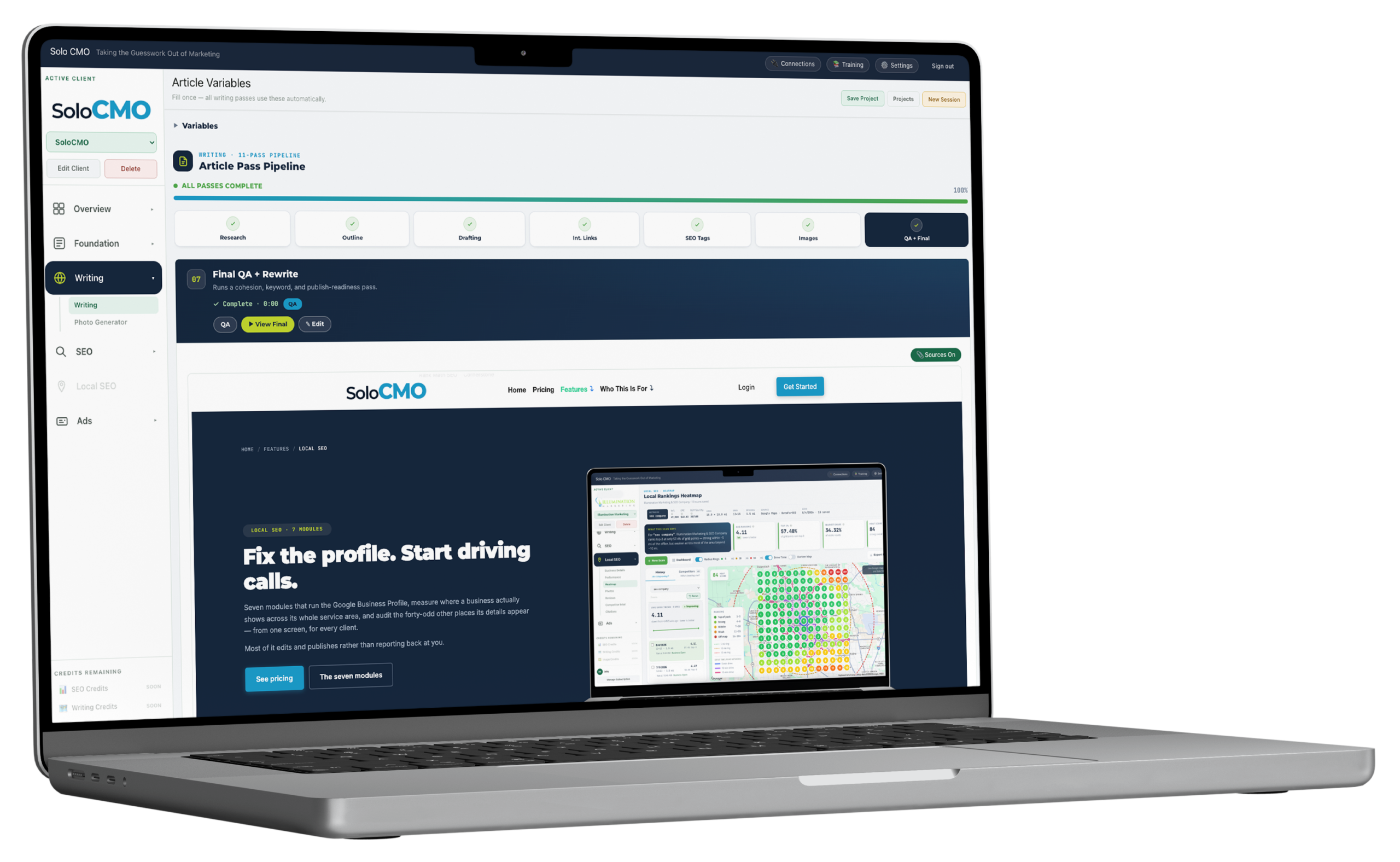
The core money pages, structured for the service and the terms it needs to hold.
Location pagesGeography-specific pages that read as distinct rather than as one template with the city swapped.
Industry pagesPages aimed at a vertical the client serves, for the searches that name the industry instead of the service.
Blog postsSupporting content mapped to a cluster, so each post has a job in the structure.
TOFU funnelTop-of-funnel assets for the searches that happen before anyone is ready to call.
BOFU funnelBottom-of-funnel assets for the shopper comparing three quotes this afternoon.
PPC landing pagesPaid landing pages built against the offer, matched to the ad that sent the click.
Campaigns, and the funnel they land in.
Ads written against a real offer and a real awareness level, plus the funnel diagnostics to find where the spend is leaking.
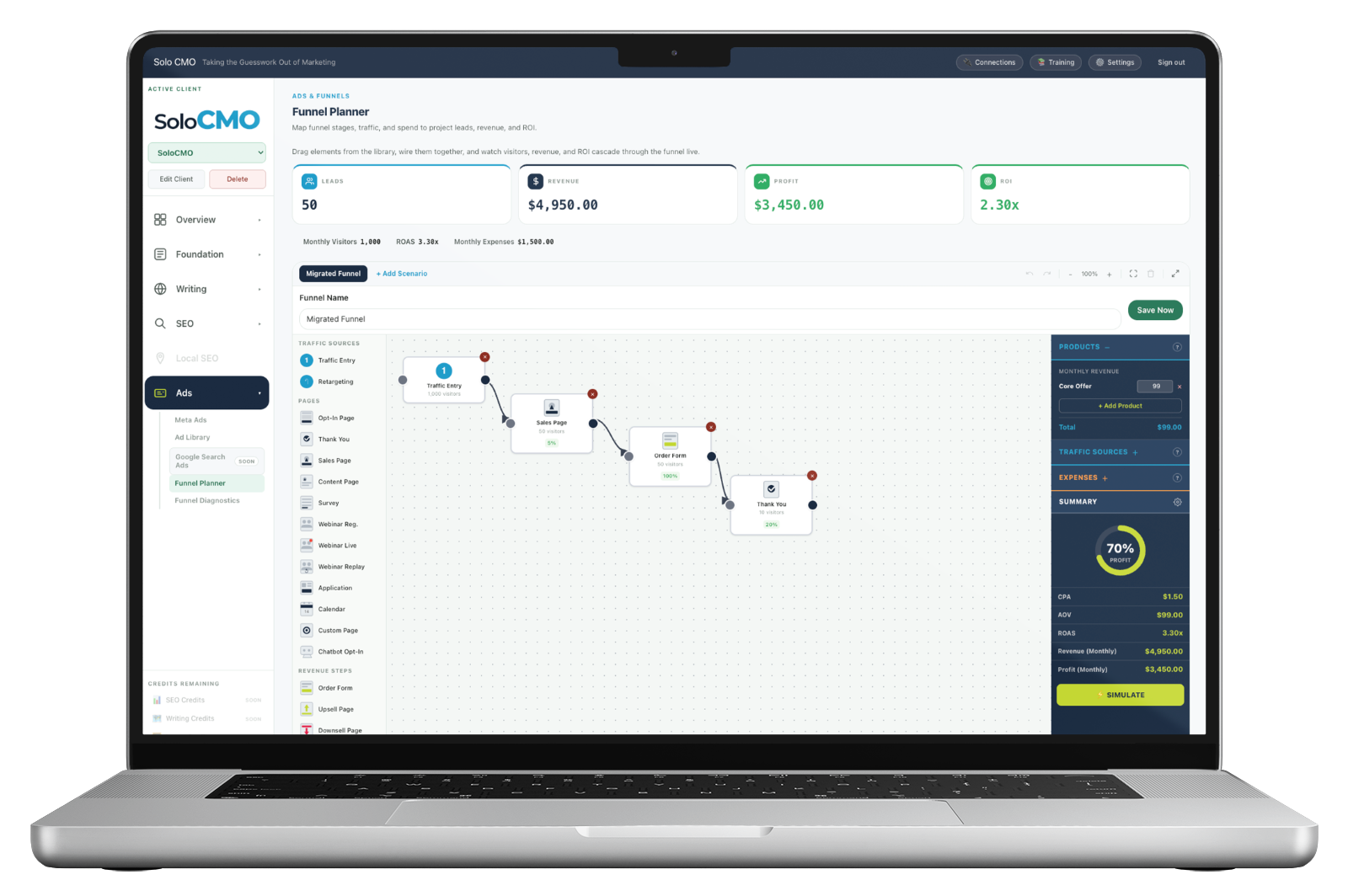
Ad sets built against the awareness ladder and proven hook frameworks, rather than one angle repeated five ways.
Ad Library & AnalyticsEvery ad you've run for every client, with performance attached — so the next campaign starts from what worked.
Funnel PlannerLay out a funnel by dragging the stages, starting from local-service archetypes rather than a blank canvas.
Funnel DiagnosticsFind the choke point — which stage loses people, and what to change before adding more spend at the top.
Always on, across the whole roster.
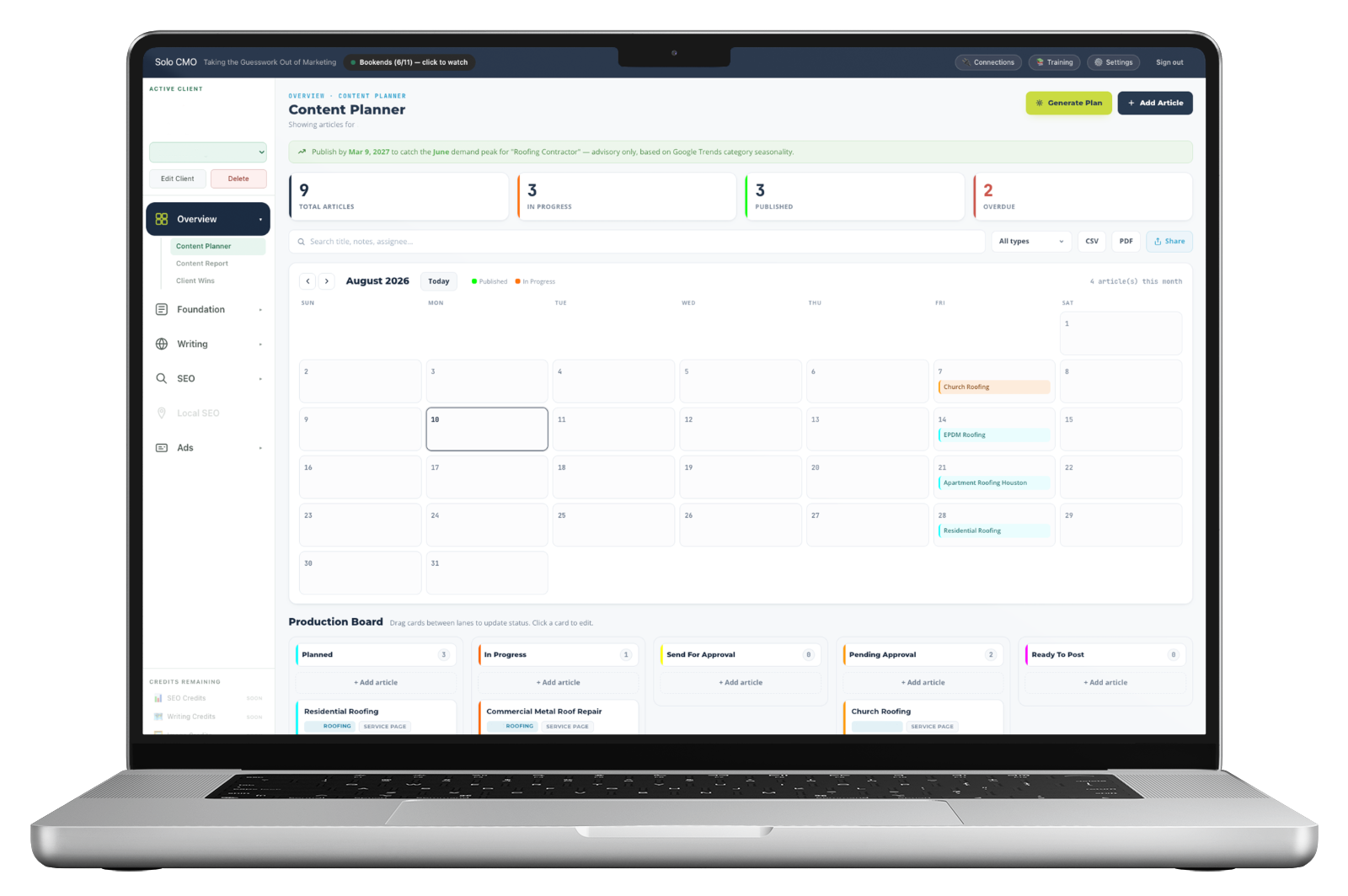
Kanban and calendar views over every client at once, so nothing ships late and nothing gets forgotten in a tab you closed.
A collection of tools doesn't do this.
The modules aren't independent. They share one client record, which is the difference between a toolbox and an operating system.
Set once
One client record
Market, services and target geography are entered on the client profile and used by every module after it. No re-briefing a tool that should already know.
Live data
Connected, not pasted
Search Console, Google Business Profile and GA4 connect directly, so diagnostics run against real numbers instead of a stale export.
Handoff
Each output is the next input
The foundation feeds the content. The SEO plan decides which pages get built. The offer drives the ads. Nothing restarts from zero.
Every plan includes every module.
There are no feature gates. Plans differ only in how many clients you run and how much you generate for them.