
SoloCMO Insights
Practical breakdowns on SEO, local search, content, paid media, AI and the systems behind sustainable growth.
The Latest

Why Is My Funnel Converting Below Industry Average?
September 18, 2026
A below-average funnel conversion rate almost always comes from one of five causes: mismatched traffic, a weak landing page or offer, poor follow-up, weak lead qualification, or the wrong benchmark. You don’t need a week of guessing to find the cause. A structured funnel diagnostic can find it in hours. If you’d rather hand the work off, that’s exactly what
Read More
Top Reads

How to Read a Local SEO Heatmap: A Beginner’s Guide to Local Search Visibility
If you’re staring at a city grid full of red, yellow, and green dots and feeling a little lost, take a breath: that confusion is normal, and it clears up fast once someone walks you through it. Learning how to read a local seo heatmap for your business’s performance takes minutes, not weeks, and you don’t need an agency to

How to Turn a Customer Avatar Into Ad Copy That Converts
You did the work. You built a customer avatar, filled out the worksheet, maybe even gave it a name, and then opened a blank ad and froze anyway. That’s not a personal failure, and the customer avatar work wasn’t wasted. It means the document you built is raw material, not a finished asset, and it still needs one more step before
Browse By Category
Why Is My Funnel Converting Below Industry Average?
September 18, 2026
A below-average funnel conversion rate almost always comes from one of five causes: mismatched traffic, a weak landing page or offer, poor follow-up, weak lead qualification, or the wrong benchmark. You don’t need a week of guessing to find the cause. A structured funnel diagnostic can find it in hours. If you’d rather hand the work off, that’s exactly what
Read More
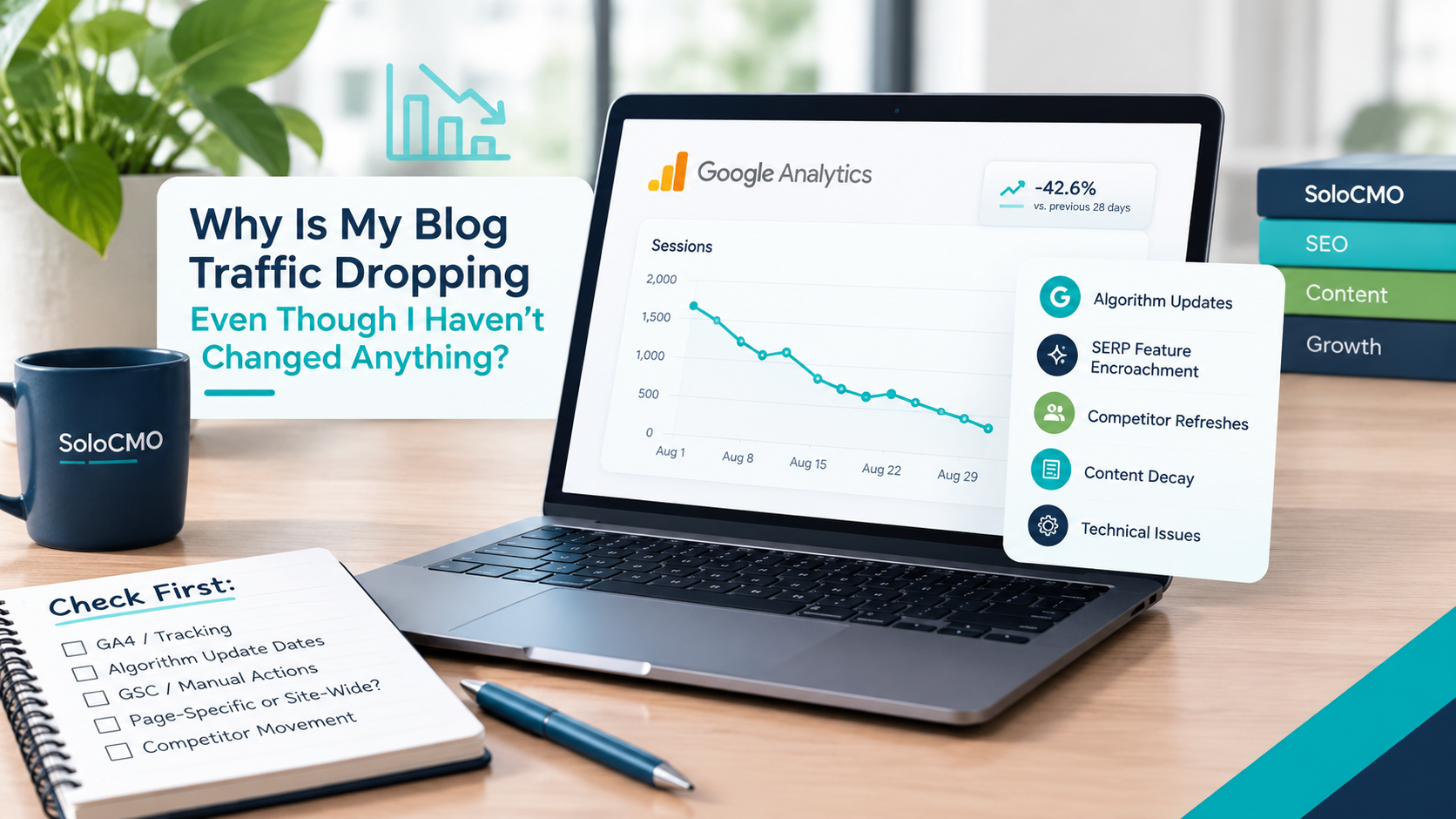
Why Is My Blog Traffic Dropping Even Though I Haven’t Changed Anything?
September 16, 2026
If you’re staring at a declining line in Google Analytics and mentally replaying every recent action looking for what you broke, stop. Blog traffic dropping for no reason is one of the most confusing problems a solo marketer can face. Here’s the short answer: it’s almost never something you did. Traffic drops without site changes are usually caused by algorithm
Read More
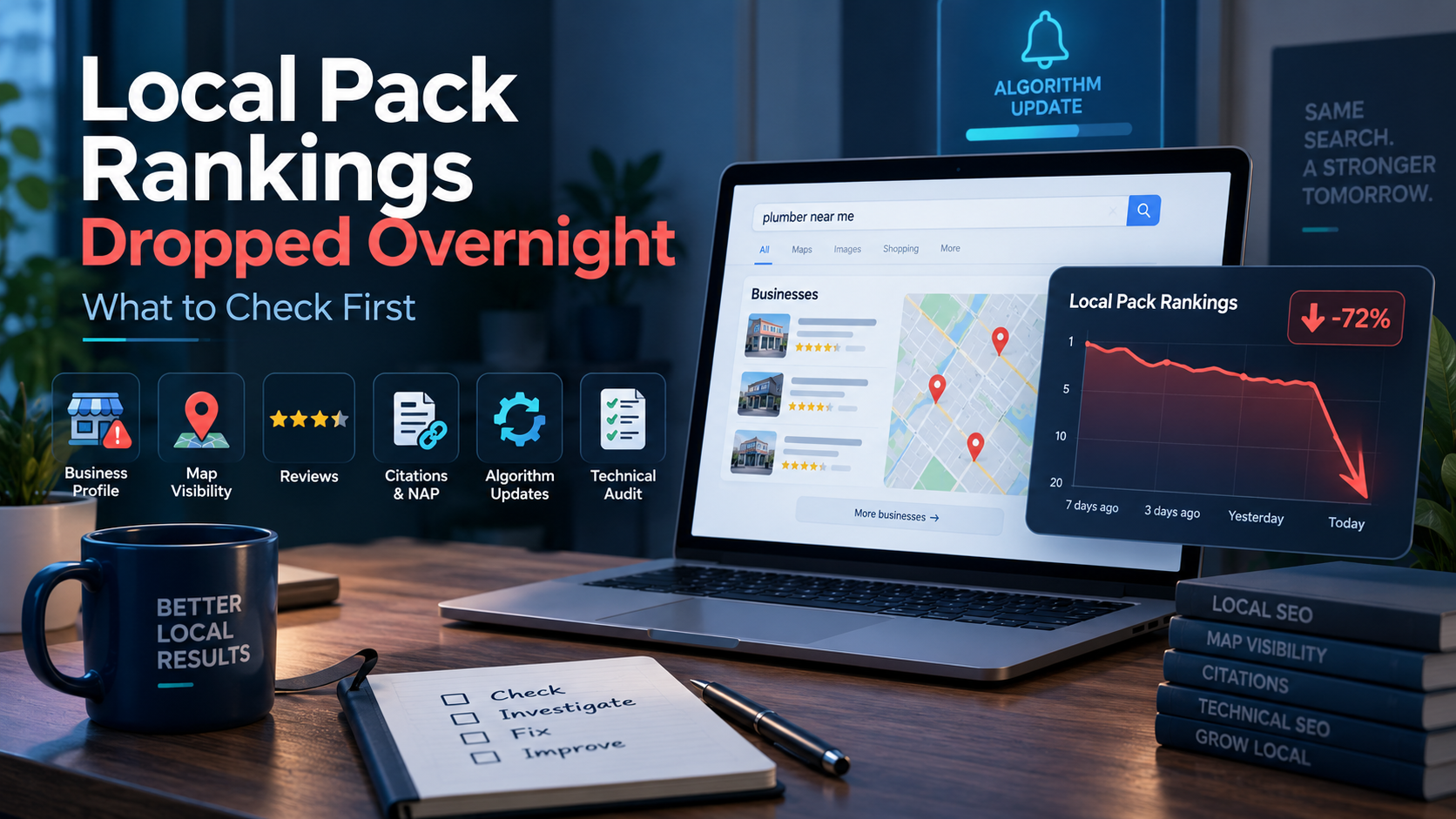
Local Pack Rankings Dropped Overnight: What to Check First
September 11, 2026
Okay, first thing: check your Google Business Profile status. When local pack rankings drop overnight, that’s the fastest and most common cause, and confirming it takes under two minutes. This isn’t a mystery that needs an agency or a week of guessing. It’s a known, ordered checklist, and you can run it yourself in the next hour. If your GBP
Read More

5 Signs Your Business Has a Local SEO Visibility Problem
September 10, 2026
Right now, someone is typing your product or service into Google. There’s a real chance they’re finding your competitor instead. This isn’t a guess, and it isn’t a scare tactic. You can check it yourself in the next ten minutes, no expensive audit required. A local SEO visibility problem doesn’t announce itself. It quietly sends business elsewhere until a drop
Read More
How to Read a Local SEO Heatmap: A Beginner’s Guide to Local Search Visibility
September 9, 2026
If you’re staring at a city grid full of red, yellow, and green dots and feeling a little lost, take a breath: that confusion is normal, and it clears up fast once someone walks you through it. Learning how to read a local seo heatmap for your business’s performance takes minutes, not weeks, and you don’t need an agency to
Read More

Why Your Buyer Persona Isn’t Converting (And How to Fix It)
September 9, 2026
A buyer persona not converting almost always traces back to one of five root causes: it was built on guesses instead of real deal data, it’s too generic, your ideal customer changed and nobody updated the document, it ignores the buying committee, or it’s never been checked against closed-won and closed-lost records. Before you rebuild anything from scratch, it helps
Read More

5 Signs Your Ideal Customer Profile Is Too Vague
September 8, 2026
If you’re a fractional CMO running three or four client accounts at once, you already know the feeling: a campaign underperforms, and you can’t tell yet whether it’s the copy, the media buy, or something further upstream. Nine times out of ten, the real culprit is a vague customer profile sitting quietly beneath everything else, burning ad spend on the
Read More
How to Turn a Customer Avatar Into Ad Copy That Converts
August 31, 2026
You did the work. You built a customer avatar, filled out the worksheet, maybe even gave it a name, and then opened a blank ad and froze anyway. That’s not a personal failure, and the customer avatar work wasn’t wasted. It means the document you built is raw material, not a finished asset, and it still needs one more step before
Read More