
Marketing Strategy

You did the work. You built a customer avatar, filled out the worksheet, maybe even gave it a name, and then opened a blank ad and froze anyway. That’s not a personal failure, and the customer avatar work wasn’t wasted. It means the document you built is raw material, not a finished asset, and it still needs one more step before it becomes something a stranger stops scrolling to read.
Key Takeaways
- A customer avatar becomes ad copy only when you pull its pain-point language, objections, desired outcomes, emotional triggers, and decision context. Demographics alone won’t do it.
- A 5-part avatar audit turns a static document into real inputs for hooks, headlines, body copy, and CTAs
- AIDA and PAS give you fill-in-the-blank structures. You map existing language instead of writing from scratch.
- The same avatar needs different treatment on Meta, Google, and LinkedIn. One version rarely works everywhere.
- Once the audit becomes a habit, the whole translation can run in under an hour per campaign

What Is a Customer Avatar
A customer avatar is a detailed profile of your ideal customer. It represents the specific type of person most likely to need, value, and purchase your product or service, including their goals, challenges, behaviors, preferences, and buying motivations.
Why Most Customer Avatar to Ad Copy Translations Fail
Most avatars are built to describe an audience, not to create a message. They list age, income, job title, and industry, then stop. That’s useful for setting up targeting in an ad platform. It’s nearly useless for writing the actual ad. Nobody has ever clicked “learn more” because an ad correctly guessed their household income.
Demographic information narrows who sees your ad. It doesn’t tell you what to say once they see it. That gap, between knowing who you’re speaking to and knowing what will make them stop, is where most solo marketers get stuck after building an avatar. If that’s where you are right now, you’re not behind. You’re at the normal point where the real work begins.
Customer Avatar vs. Buyer Persona in Ad Copy
People use “customer avatar” and “buyer persona” interchangeably, but for copywriting they’re not quite the same tool. A persona tends to be broader. It’s useful for content strategy and positioning across a whole target market. A customer avatar, done well, is narrower and more specific. One fictional person, with quotable language attached to their frustrations, not just a labeled segment.
Where the Message Gets Lost in Translation
The failure point is almost always the same. A marketer copies a bullet point straight from the avatar document into a headline. “Busy operations managers aged 35-50” becomes a headline. It falls flat because it’s a category, not a sentence a real person would think or say. The message needs to sound like something Olivia, more on her shortly, would say out loud. Not like something a research team wrote about her.

The 5-Part Customer Avatar Audit for Ad Copy Inputs
Before you write a single line, pull five things out of your customer avatar. This audit separates a document that sits in a folder from one that actually produces copy.
The Five Inputs, Defined
- Pain point language: the exact words your ideal customer uses to describe the problem, not a category label
- Objection language: the specific hesitation that stops them from buying, in their own words
- Desired outcome: what life or work looks like once the problem is solved
- Emotional trigger: the feeling driving the decision, like frustration, relief, ambition, or fear of falling behind
- Decision-making context: what’s happening around them when they’re ready to buy, like a budget cycle or a bad experience with a past vendor
How Specific Is Specific Enough?
Specific enough that you could drop it directly into an ad without editing it. “Frustrated with inefficiency” is a category. “Loses two hours a day to manual scheduling emails” is copy. If your avatar only lists demographics and a job title, it’s not ad-ready yet. It needs a quick pain-point pass first.
To find that language, pull from support tickets, sales call notes, reviews left on competitor products, and the exact phrases customers type into search bars. These sources give you real problems in the customer’s own words, not a marketer’s paraphrase of them. If your current avatar is thin on this kind of detail, it’s worth spending twenty minutes filling that in before you write anything. The audit works only as well as the language you feed it.

Step-by-Step: Mapping Avatar Inputs to Ad Copy Elements (Worked Example)
Here’s the four-step process, applied to a fictional person we’ll call Ops Manager Olivia. Giving your avatar a name matters more than it sounds like it should. It forces you to write to one person instead of a demographic bucket.
Olivia runs operations at a 40-person logistics company. Her pain point language: “I lose two hours a day to manual scheduling emails.” Her desired outcome: “one dashboard that just works.” Her objection: “we tried a tool like this before and it didn’t stick.” Her decision context: she’s renewing software budget at the end of the quarter.
The Four-Step Mapping Process
- Hook from pain point language: open with the exact frustration, word for word if possible
- Headline from desired outcome: state the after-state she wants, not your product or service feature list
- Body copy from objection-handling: name the hesitation directly and answer it before she has to ask
- CTA from decision-making context: tie the action to her actual timing, not a generic “learn more”
Before and After: Ops Manager Olivia
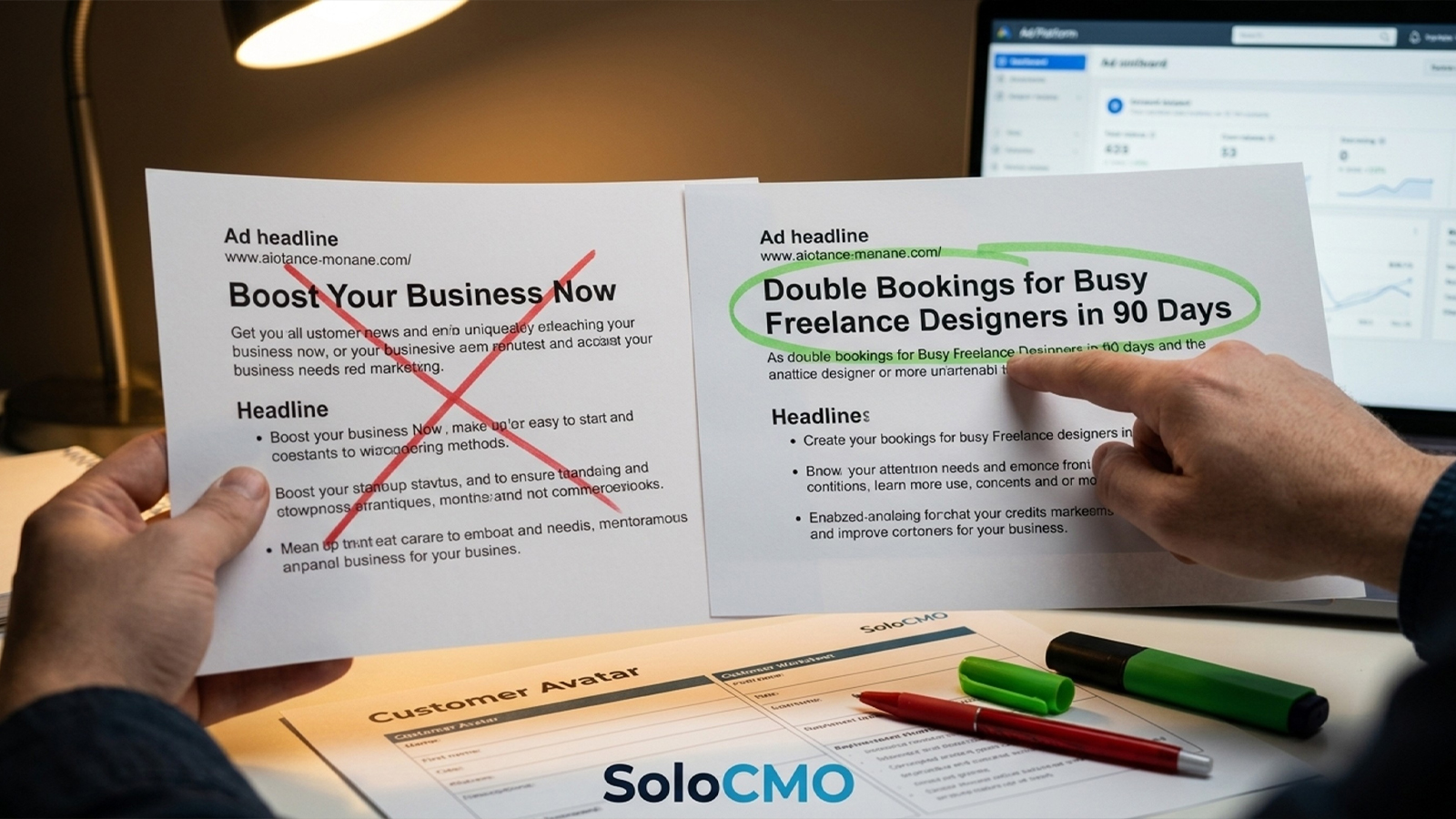
Before: “Powerful scheduling software for growing teams.” Generic. Demographic-driven. Could belong to any product in the category.
After: “Still losing two hours a day to scheduling emails? One dashboard replaces the back-and-forth, and it’s built to actually stick this time. Lock in your setup before your budget resets next quarter.” Same avatar, same product. Now it’s built from her language instead of ours.
Notice what changed. Nothing about Olivia’s demographics moved. What changed is that the copy now sounds like something she’d say to a coworker, not something a vendor would say about her.

Platform-Specific Adaptation: Meta, Google, and LinkedIn
The same customer avatar should not produce identical copy everywhere. Running the same version across every platform is a common reason a well-built avatar still underperforms. Platform context changes what resonates, even when the target audience stays the same.
Meta Feed Ads
Meta Ads Manager rewards a scroll-stopping, emotional hook first. Lead with Olivia’s pain point in a casual tone: “Still buried in scheduling emails every morning?” Save the feature explanation for the second line.
Google Search Ads
Google Ads is intent-driven. Someone searching “scheduling software for logistics teams” has already named their problem. Match her exact search words in the headline, then put the desired outcome in the description line: “One dashboard. No more manual scheduling.”
LinkedIn Sponsored Content
LinkedIn Campaign Manager calls for a more professional tone. Lead with credibility and objection-handling rather than emotion: “Most scheduling tools don’t survive the first quarter. Here’s why ops teams are sticking with this one.” Close with a CTA tied to her decision context, like reviewing options before budget renewal.

Applying AIDA and PAS Frameworks to Avatar Data (With Templates)
You don’t need to invent a structure every time you write. Two well-known copywriting frameworks map directly onto the five audit inputs.
AIDA Template Mapped to Avatar Fields
| AIDA Slot | Avatar Input | Olivia Example |
|---|---|---|
| Attention | Emotional trigger | “Still buried in scheduling emails?” |
| Interest | Pain point language | “Two hours a day, gone to back-and-forth threads.” |
| Desire | Desired outcome | “One dashboard that actually works.” |
| Action | Decision-making context | “Lock in your setup before quarter-end.” |
PAS Template Mapped to Avatar Fields
| PAS Slot | Avatar Input | Olivia Example |
|---|---|---|
| Problem | Pain point language | “Manual scheduling is eating your day.” |
| Agitate | Objection or consequence | “You’ve tried a fix before and it didn’t stick.” |
| Solution | Product tied to outcome | “This one’s built to stay, starting today.” |
StoryBrand and the Jobs-to-be-Done framework add depth once the structure is set. StoryBrand positions the customer as the hero and your brand as the guide. That keeps the message from centering your product instead of her. Jobs-to-be-Done asks what outcome she’s actually “hiring” you for, which sharpens the desire and solution slots above. A customer avatar worksheet becomes a working template the moment its fields get labeled against these slots, instead of sitting as static notes.
Mistakes to Avoid When Using a Customer Avatar for Ads
- Writing a generic avatar with only categories, and no real quotes to pull from
- Documenting objections in the customer avatar profile but never addressing them anywhere in the body copy
- Using one customer avatar for every ad regardless of platform, funnel stage, or offer
How many avatars does one campaign need? Generally one main avatar per campaign is enough. Cold traffic and retargeting audiences may need light variants of that same avatar, adjusted for what they already know, rather than a completely new one built from scratch.

How Do You Test and Iterate Ad Copy Against the Avatar?
Once the ad is live, the avatar tells you what to watch for, not just what to write. If click-through is low, the hook probably missed the pain point language. If clicks come in but conversions don’t, the objection wasn’t actually answered in the body copy. Performance data points back at a specific line in the avatar, not a vague “the ad didn’t work.” Platform analytics are what surface these patterns in the first place, turning a gut feeling about underperformance into a specific line item you can actually fix.
Reading the Results Against the Five Inputs
- Low CTR: revisit the hook and emotional trigger, they may be too generic
- High CTR, low conversion: the objection language wasn’t addressed clearly enough in the body
- Fast early drop-off on Google Ads: the headline may not match the searcher’s actual query
- Weak LinkedIn engagement: the tone may be too casual for the decision-making context
Small changes matter more than a full rewrite. Swap the hook, keep the rest, and see what moves. That’s a faster way to find out which avatar input was actually driving the result.
Conclusion
The manual process works. Audit the avatar, map the five inputs to hook, headline, body, and CTA, then adjust for platform. You end up with copy built on real language instead of guesses. Run this audit against your existing avatar before you write your next ad, and you’ll never face a blank page the same way again.
That one shift takes the process from hours to minutes: SoloCMO applies this same audit automatically, once your customer avatar is loaded in. Master the manual method first. Then, if you’d like to see what the automated version looks like, the customer avatar page walks through how the tool handles the same five inputs for you.
FAQ
What is the difference between a customer avatar and buyer persona in ad copy?
A customer avatar is a single, specific fictional buyer built with detailed, quotable pain-point language. A buyer persona is typically a broader marketing tool covering a segment. For ad copy, the avatar’s specificity is what makes it usable, since you need exact phrasing, not a general description.
How specific should a customer avatar be for writing ads?
A customer avatar should be specific enough that you could drop its language directly into an ad without rewriting it. Vague categories like “busy professional” don’t work. A quotable line like “loses two hours a day to manual scheduling” does.
What are the best frameworks for writing ad copy from a customer avatar?
AIDA, PAS, StoryBrand, and Jobs-to-be-Done are the four most useful frameworks for turning avatar data into copy. AIDA and PAS give you a structural sequence, while StoryBrand and JTBD deepen the message by clarifying whose story the ad is telling and what outcome the customer is really after.
How do you find pain points for a customer avatar?
Pain points for a customer avatar come from support tickets, sales call notes, competitor reviews, and the exact search terms your ideal customer types. These sources capture real language, which is far more useful for copywriting than guesses written from a desk.
Can AI write ad copy from a customer avatar?
AI tools like ChatGPT and Claude can draft copy from customer avatar inputs, but the output tends to be polished and generic without structured prompting. Feeding the tool your five audit inputs directly, rather than the whole avatar document at once, produces sharper results. This is the exact structure a purpose-built system like SoloCMO applies automatically.
How many customer avatars do you need for one ad campaign?
Most campaigns need one main customer avatar, with light variants for different funnel stages like cold traffic versus retargeting. You rarely need entirely separate avatars unless you’re targeting a genuinely different type of buyer.
How do you create a customer avatar in 5 steps?
You create a customer avatar in 5 steps by defining demographics, goals and aspirations, pain points, objections, and decision triggers, in that order. Building it well is only half the job, though. Translating it into ad copy, which this guide covers, is the step most marketers skip.
Recent Posts

Why Is My Funnel Converting Below Industry Average?
A below-average funnel conversion rate almost always comes from one of five causes: mismatched traffic, a weak landing page or offer, poor follow-up, weak lead qualification, or the wrong benchmark. You don’t need a week of guessing to find the cause. A structured funnel diagnostic can find it in hours. If you’d rather hand the work off, that’s exactly what
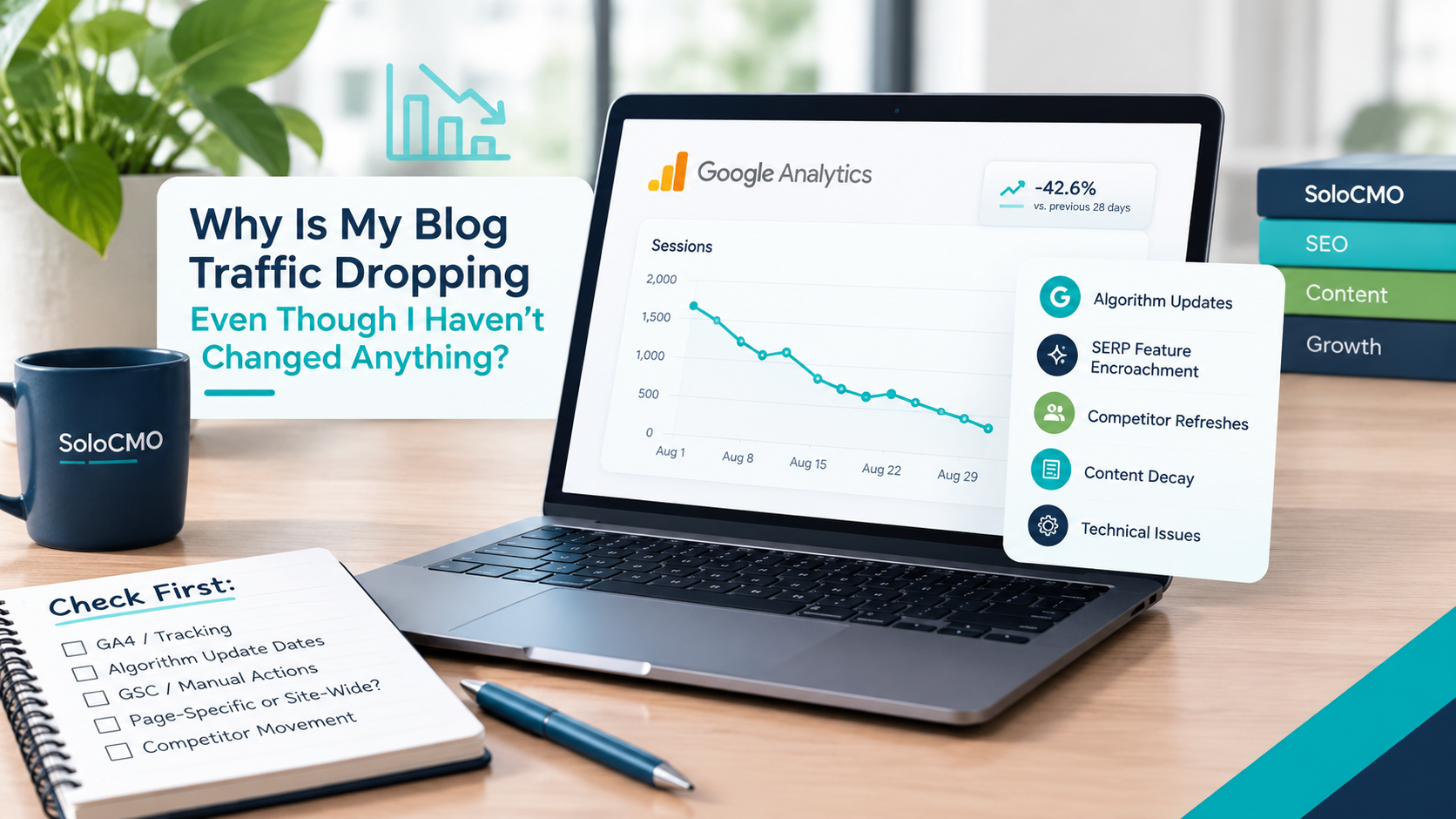
Why Is My Blog Traffic Dropping Even Though I Haven’t Changed Anything?
If you’re staring at a declining line in Google Analytics and mentally replaying every recent action looking for what you broke, stop. Blog traffic dropping for no reason is one of the most confusing problems a solo marketer can face. Here’s the short answer: it’s almost never something you did. Traffic drops without site changes are usually caused by algorithm
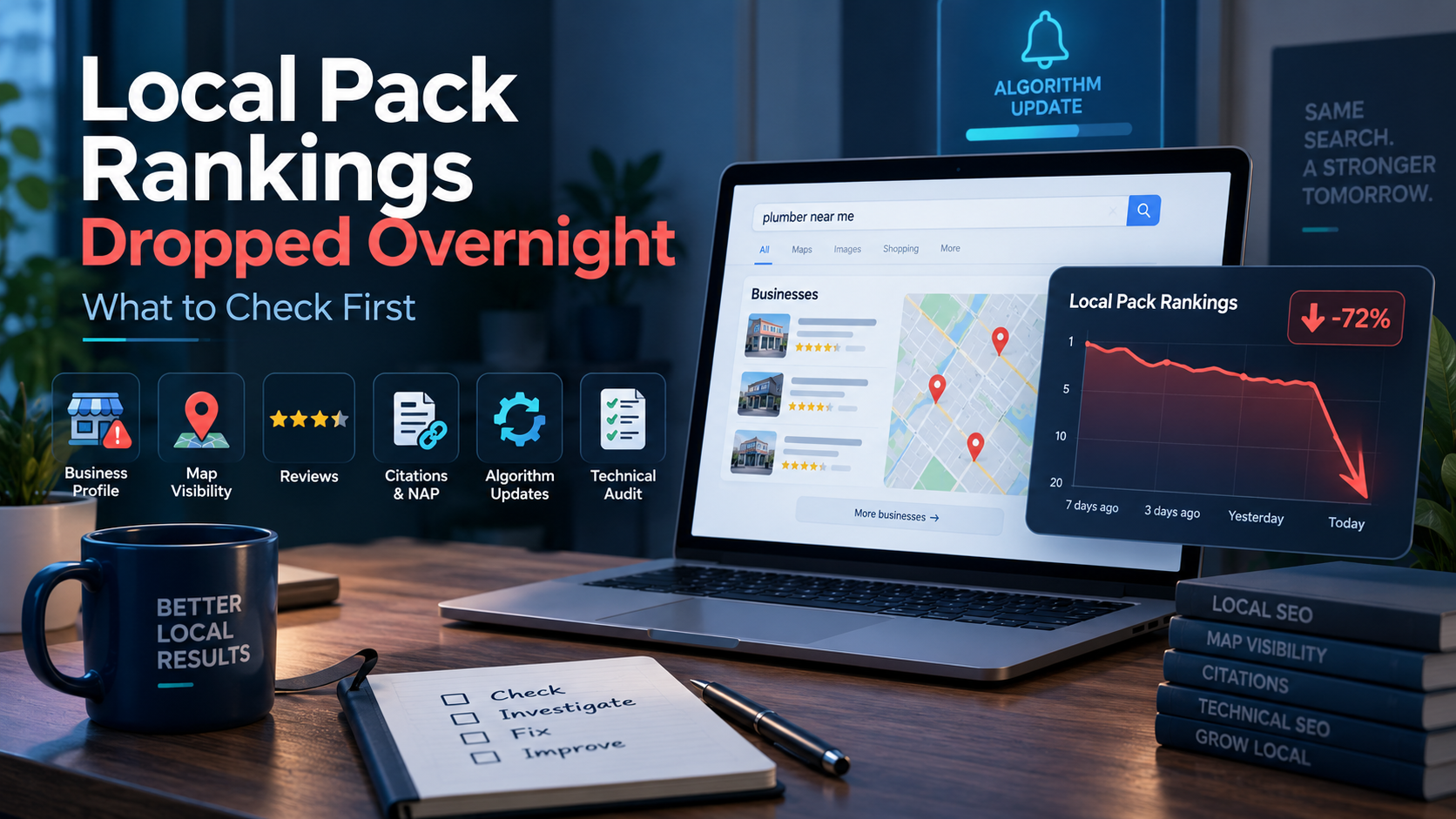
Local Pack Rankings Dropped Overnight: What to Check First
Okay, first thing: check your Google Business Profile status. When local pack rankings drop overnight, that’s the fastest and most common cause, and confirming it takes under two minutes. This isn’t a mystery that needs an agency or a week of guessing. It’s a known, ordered checklist, and you can run it yourself in the next hour. If your GBP
Get Smarter About Your Marketing
Practical SEO, AI, content, and marketing strategies you can put to work immediately.
Join the Newsletter