
SEO
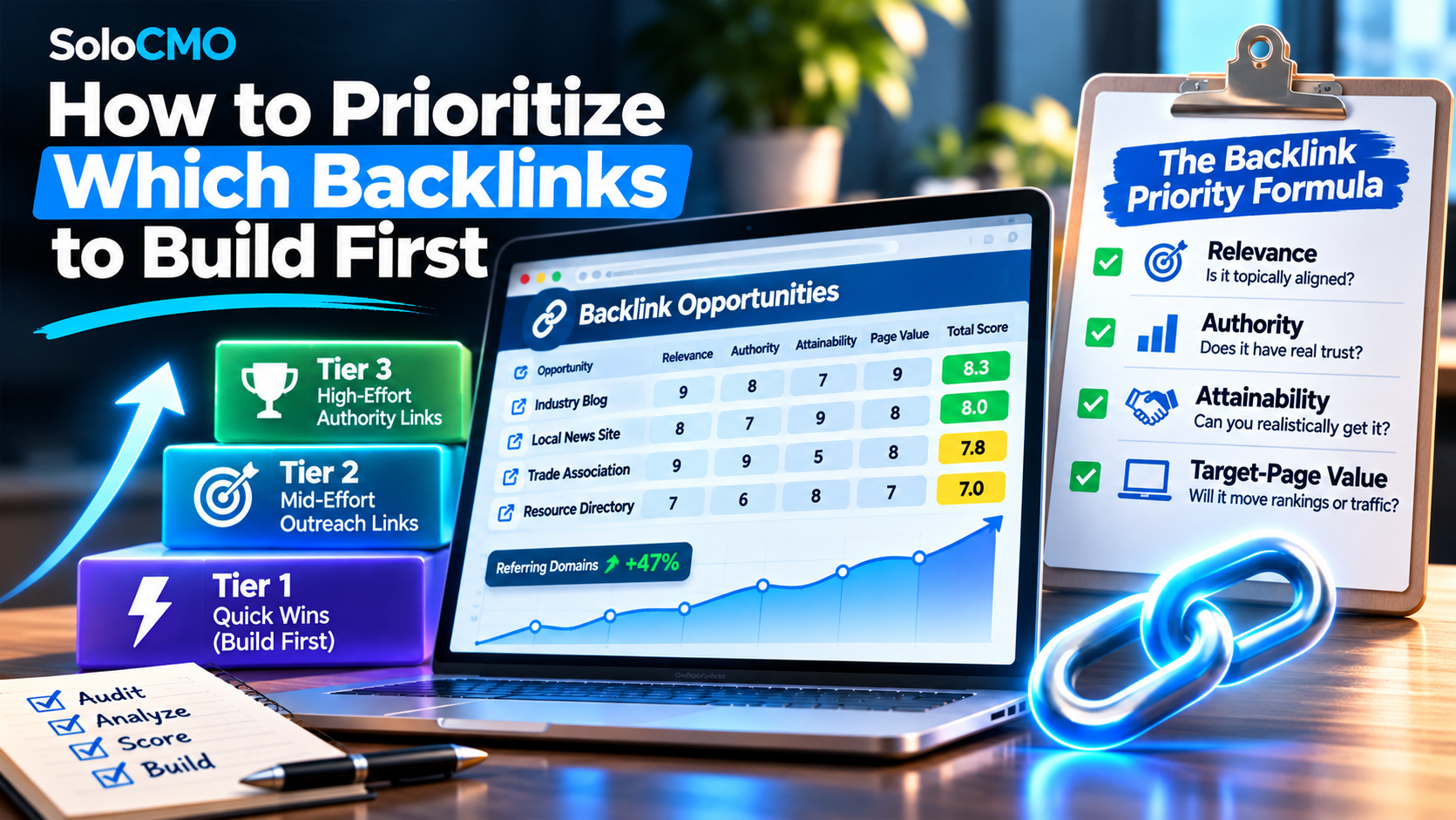
How do you prioritize which backlinks to build first? Score each opportunity on relevance, authority, attainability, and target-page value, then build the highest-scoring links first. That keeps limited hours pointed at links that can move rankings. If you want the sorting done faster, a link planner built for one-person teams can run it for you, and the rest of this guide shows how to prioritize backlink opportunities in a way you can defend to any client.
Key Takeaways
- Score every opportunity on relevance, authority, attainability, and traffic potential, then subtract a risk penalty. Build in score order.
- Choose target pages before link types, so every link points somewhere that can earn a return.
- Work the tiers in order: quick wins first, mid-effort outreach second, high-effort plays third.
- Follow a 90-day build order with a 70/20/10 effort split, and skip links that fail the risk check.
- Report referring domains gained, ranking movement on target pages, and organic conversions each month.
Why Does Sequencing Backlinks Matter for a One-Person Team?
Time is the scarce asset, and a fractional CMO with ten hours a month on a client cannot afford to spend an entire month on outreach that never lands. Sequencing protects those hours and keeps backlinks arriving instead of stalling on one big bet. This article walks through a repeatable way to do exactly that, and if you manage several accounts, the same method scales without adding hours.
The Real Cost of Building Links in the Wrong Order
Picture a small client with a ten-hour monthly allocation, where one failed campaign aimed at high-authority sites consumes all of it. The client sees no new backlinks, no movement, and an invoice. The real cost is the quick wins you skipped while chasing a trophy placement.
Links still matter. Google’s systems have used PageRank, a link-based measure of importance, since the beginning, and Ahrefs research found that most pages receive no organic traffic from Google, with the number of linking sites correlating with traffic. Verify the current figures in the source before quoting them to a client. Link work remains a core part of any serious SEO program and of broader digital marketing, and because it is so consequential, it deserves a plan rather than ad hoc effort.
Why Intuition Fails Across Multiple Clients
Intuition favors whatever looks impressive: a DR 80 site feels like a win even if its readers will never care about your client. Intuition also shifts with mood and from one client to the next, so you cannot defend it in a review meeting.
A scoring method corrects that weakness. When you prioritize with a repeatable formula, the same inputs produce the same ranking for every client. Sequencing also protects the relationship, because early wins buy patience for slower, higher-effort work, and that patience is what allows links to pay off over months instead of days. Anyone managing SEO for several small accounts knows how quickly a quiet month can turn into a lost account, which makes a defensible order of operations the first habit to build.
Step 1: How Do You Audit Your Current Backlink Profile?
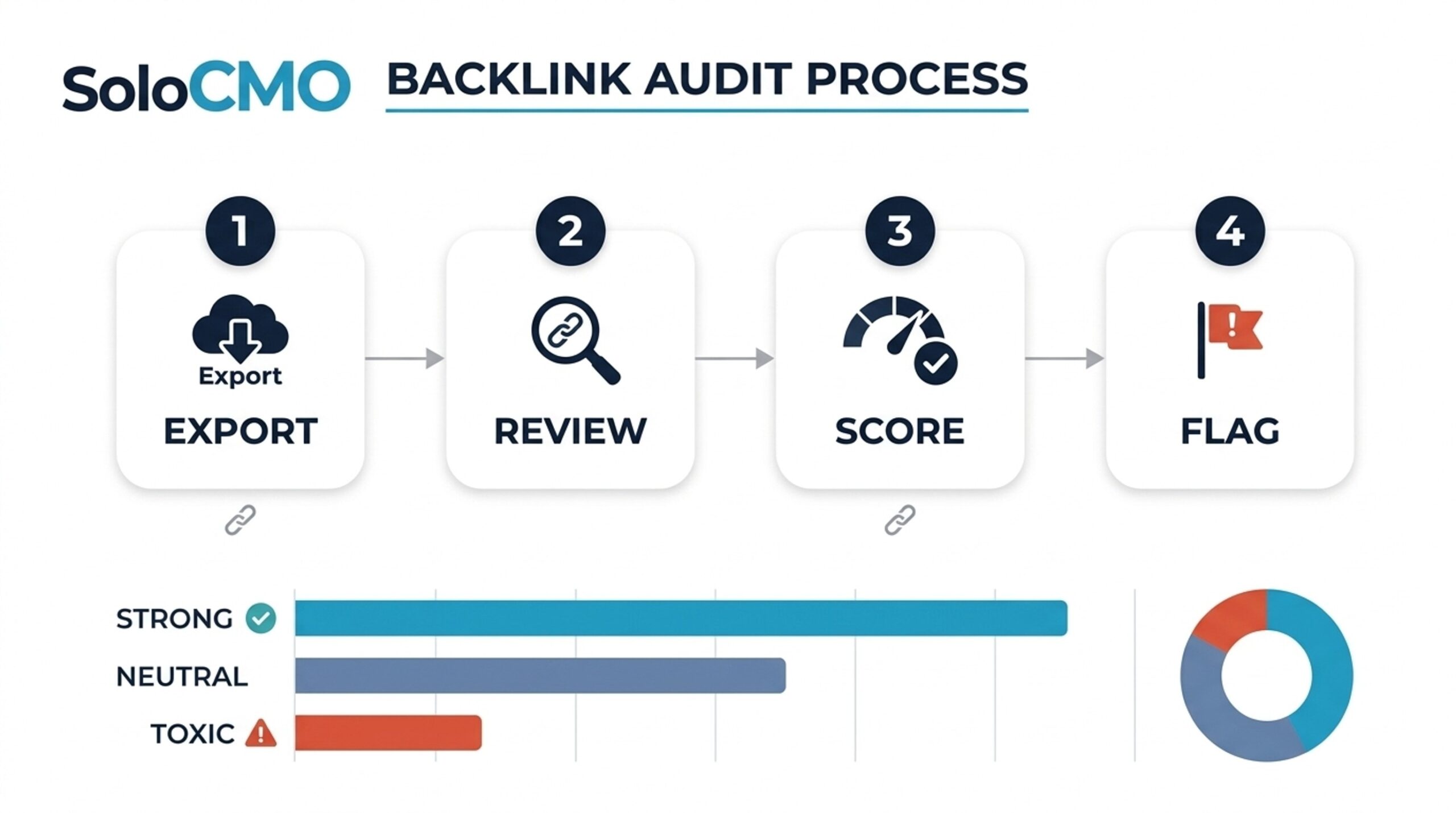
Start with what the client already has. A clean baseline reveals where the gaps are and which risks to fix before adding anything new. A backlink audit is also the foundation of any technical SEO review.
What to Pull From Google Search Console and Ahrefs
The Google Search Console Links report is free and first-party, and it shows top linking sites, top linked pages, and top linking text. Because it reports only a sample, pair it with Ahrefs Site Explorer, which adds referring domain counts, Domain Rating, anchor mix, and new and lost backlinks. Moz Link Explorer gives you Domain Authority and spam score as a second opinion.
Baseline four things: the number of unique linking sites, the most linked pages, the anchor-text mix, and any risky links. That one-page summary is something you can hand the client in week one, and it makes a useful first deliverable when you are still earning trust.
How to Spot Risky Inbound Links and Penguin-Era Residue
Scan the inbound links for patterns that look purchased or manufactured. Sitewide footer links, exact-match anchors repeated dozens of times, and links from unrelated foreign-language sites are the usual suspects. Google Penguin, first released in 2012, targeted manipulative link patterns and now runs inside the core algorithm, while Google also issues manual actions, which appear in the Search Console Manual Actions report.
If a client has a past penalty or old paid-link residue, flag it before building anything new. Then crawl the client’s own site with Screaming Frog to identify pages that lack internal link support. You will need that list in Step 3, because PageRank flows through internal links as well as external ones.
Step 2: How Do You Run a Competitor Link-Gap Analysis?
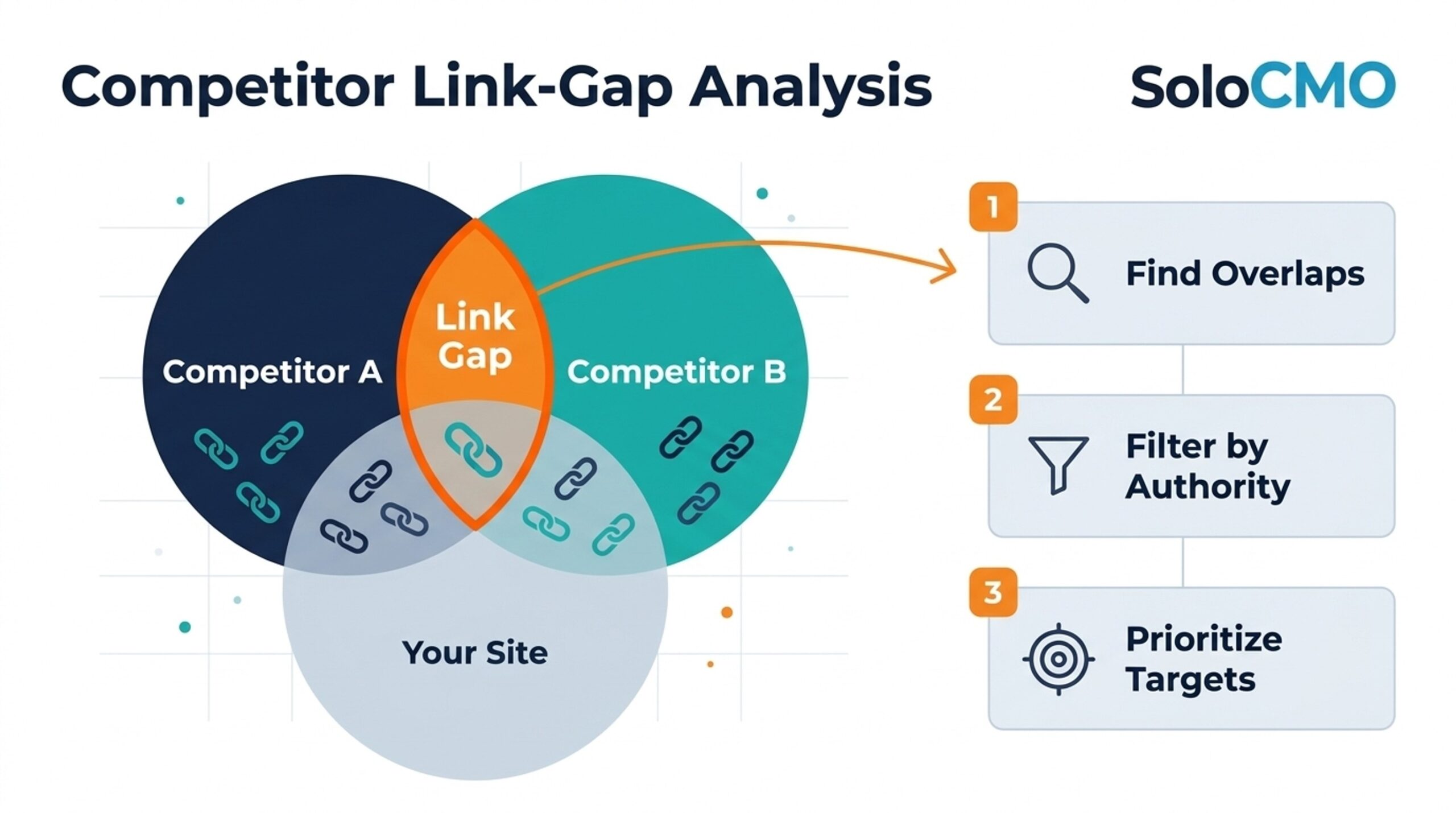
A link-gap analysis reveals which sites already link to your competitors but not to your client. Those sites have proven they will link to this topic, so they make better prospects than a cold list.
Using Ahrefs Link Intersect and Semrush Backlink Gap
In Ahrefs, Link Intersect lets you enter your domain and a handful of competitors, then returns the sites that link to them but not to you. Semrush Backlink Gap works the same way, comparing up to five competitors and filtering by Authority Score. Pick competitors by search overlap, meaning the sites that actually rank for the client’s target queries, not just the companies the client names.
Prioritize prospects that link to two or more competitors, since a site that has linked to several rivals is far more likely to link to a good fit.
Cross-Checking With Majestic and Exporting a Shortlist
Majestic adds Trust Flow and Citation Flow. A site with high Citation Flow but low Trust Flow often has plenty of links and little trust, which can signal spam, so use it as a cross-check rather than a verdict.
Export the filtered list and keep only what you will score. A short shortlist keeps the data manageable:
- Domain and the authority metric you chose
- Link type (citation, resource page, PR, and so on)
- Number of competitors linking
- Intended target page on the client site
- Contact or submission route
The result is a finite, filtered list instead of a data dump, which also trims the tool sprawl many solo operators dread. If assembling and sorting these lists across several clients is where your hours disappear, that is the kind of repetitive work a one-person-team tool is meant to absorb.
Step 3: Which Pages Should You Build Backlinks To First?
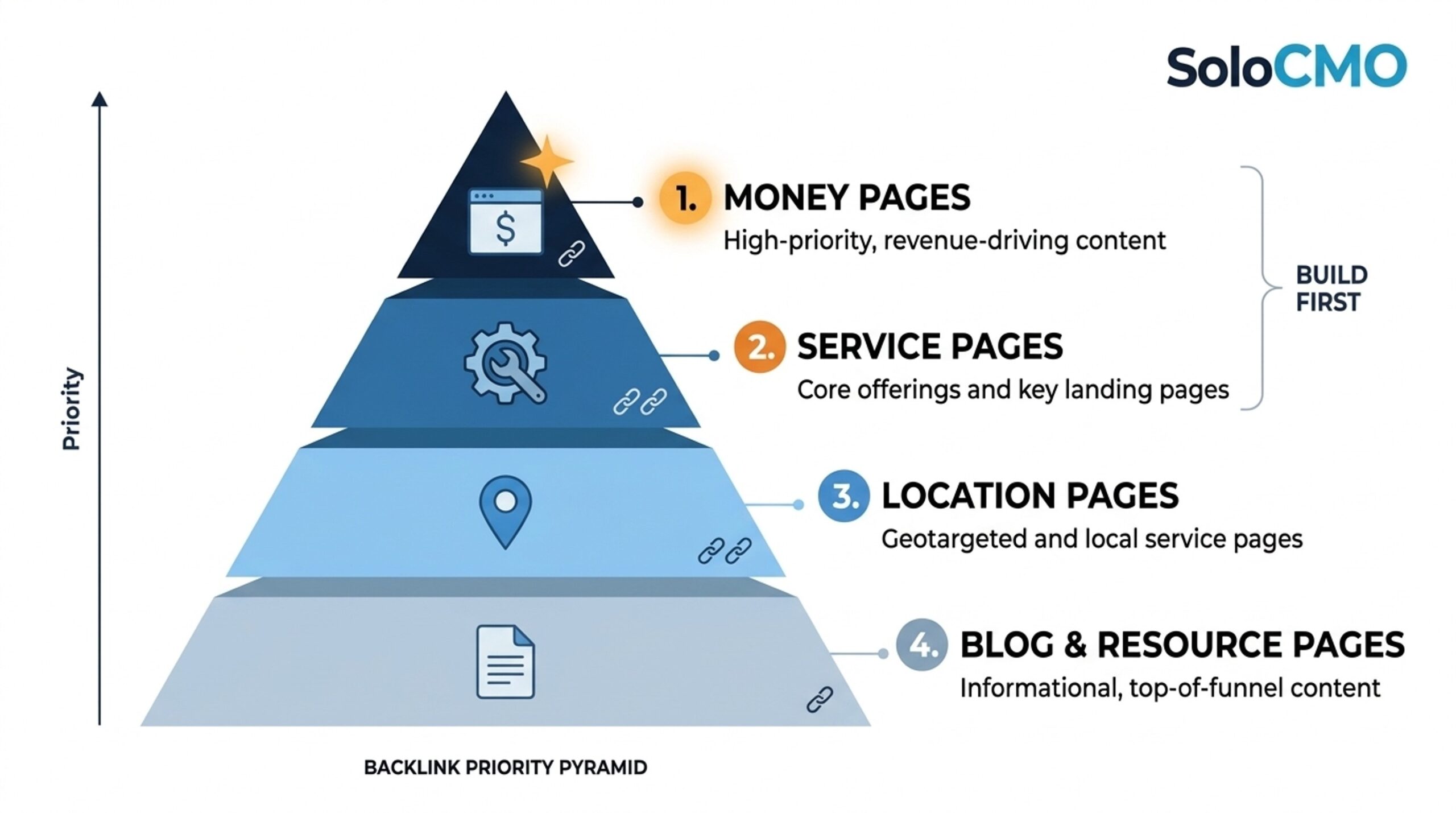
Choose the destination before the tactic, because a great link to the wrong page wastes its value.
What Are the Best Target Pages for Link Building?
There are three kinds of target pages. Money pages and landing pages convert visitors but are hard to earn links for directly, since few sites want to link to a sales page. Cornerstone content and strong blog posts, such as a well-researched guide, are linkable assets, built to attract backlinks and pass value onward through internal links. Pages ranking in positions 4 to 15 in Google Search Console are striking-distance pages, and a handful of extra backlinks can lift them onto page one.
To find them, filter Search Console by average position 4 to 15 and sort by impressions. Because those pages already have relevance and need only a little more authority, they often deliver the fastest visible payoff and deserve a high target-page value score. For money pages, route links to a linkable asset that points internally to the money page. Good sources include relevant suppliers, associations, and partners that already trust the client, and high-authority partners are especially worth approaching when they genuinely overlap with the client’s topic.
Strong content is what makes outreach to these partners succeed, because a site is far more willing to link to a page that is genuinely useful to its own readers.
Should You Build Links to Your Homepage or Inner Pages?
Build both, but weight inner pages more heavily for ranking goals. The homepage collects links naturally over time and carries brand signals, whereas inner pages need deliberate link building to rank for specific queries, because a general homepage link does little for a page targeting one keyword. Send the most intentional outreach to pages that match what you want to rank for, and let the homepage pick up brand mentions and citations.
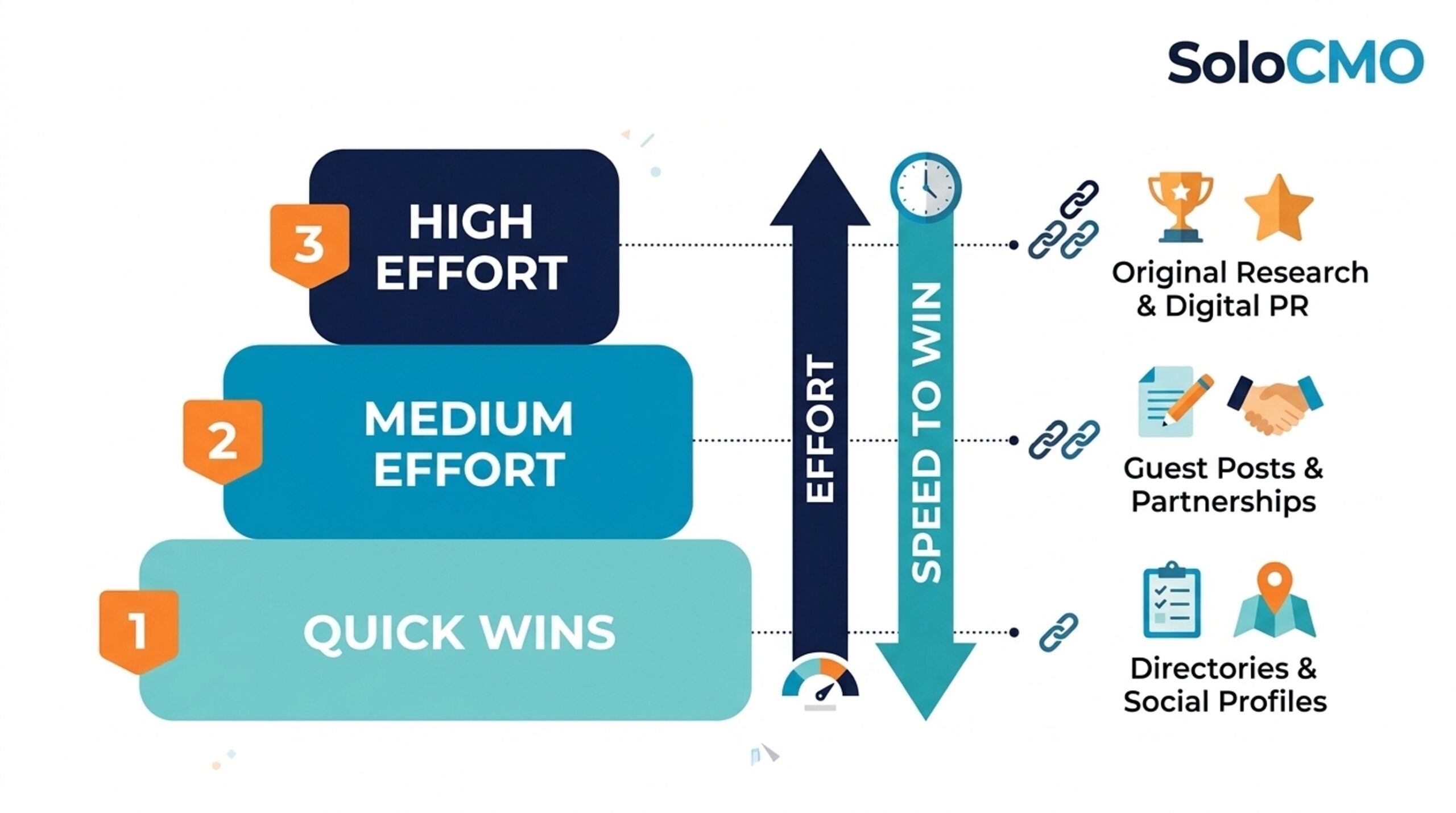
Step 4: How Do You Sort Backlink Opportunities Into Effort Tiers?
You can sort opportunities by effort, by expected impact, or by risk. Effort is the easiest to apply first and maps well to a limited budget, and it also gives you a clear way to explain to clients why month one looks like a series of small wins.
| Tier | Typical Tactics | Hours Per Link | Expected Impact | Risk |
|---|---|---|---|---|
| 1: Quick wins | Unlinked mentions, citations, niche directories | 0.5 to 1 | Low to moderate | Low |
| 2: Mid-effort | Source requests, resource pages, broken-link outreach | 2 to 5 | Moderate to high | Low to moderate |
| 3: High-effort | Digital PR, original research, case studies, guest posts | 8 to 20 | High | Moderate |
The hours are planning estimates, not measured benchmarks. Adjust them to your own process.
Tier 1: Quick Wins
Start with unlinked brand mentions, where a site already names the client without a link; a short, friendly request usually works. Add Google Business Profile and citations from sources such as Yelp, which matter most for clients with a physical or service-area presence. Include niche directories that are tied to the industry, along with any online listings the client already controls. These tactics are cheap and low-risk, and they build early proof.
Tier 2: Mid-Effort Outreach
Source-request platforms connect experts with journalists. HARO was rebranded as Connectively, which then wound down in late 2024, and because sources disagree on details, you should verify which platforms are active before relying on one. Resource-page outreach and broken-link outreach on relevant industry blogs also sit here. They demand more personalization, but they land quality backlinks with real editorial value.
Tier 3: High-Effort Plays
Digital PR, original research, and client case studies take the most time yet can earn the strongest backlinks. One well-documented case study with original data can attract citations for months. A guest post on a respected publication still has a place when it is editorially placed and useful to readers. Tier 3 becomes easier once Tier 1 results give you something to point to.
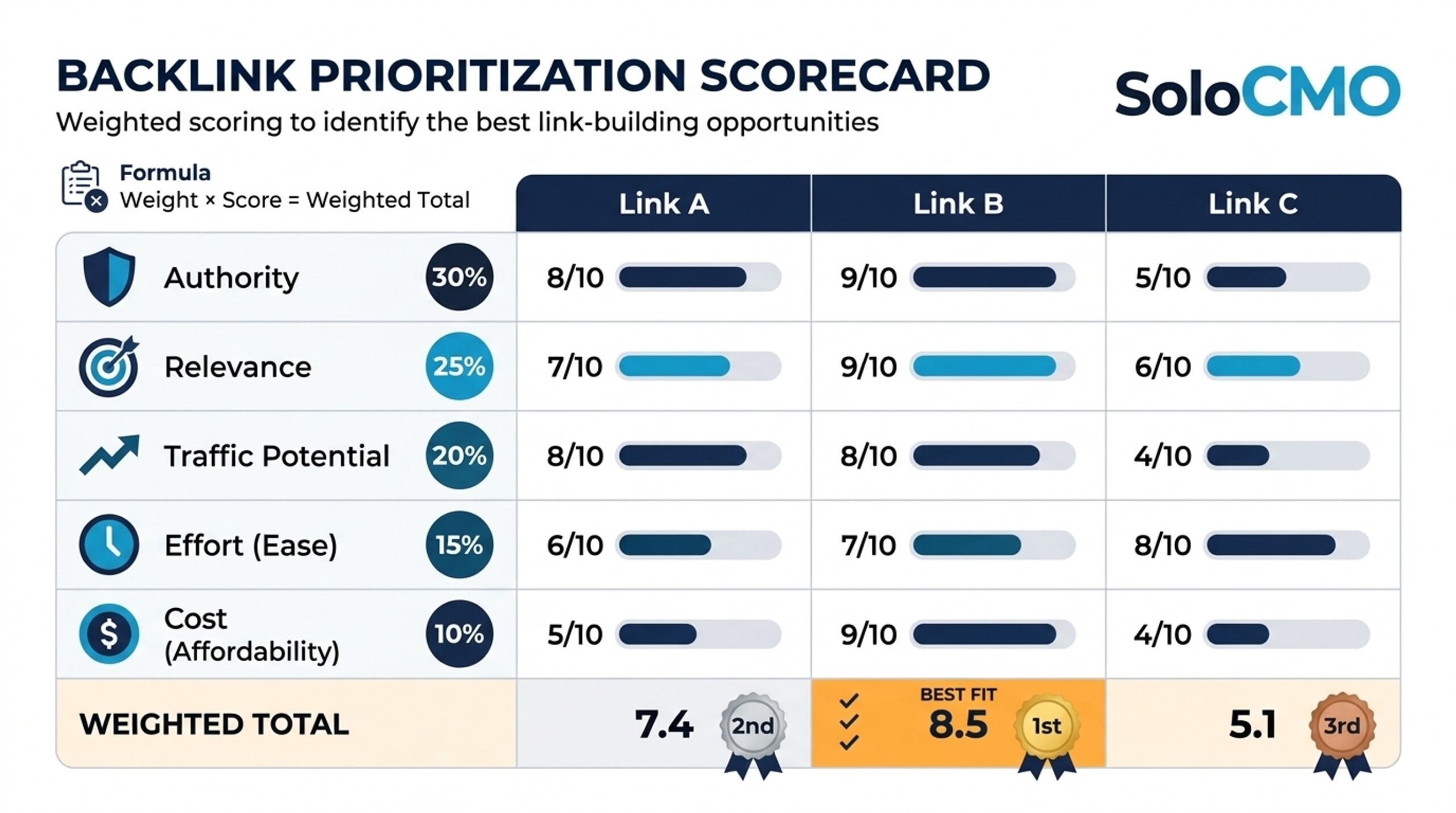
Step 5: How Do You Build a Weighted Backlink Prioritization Scorecard?
The scorecard turns your shortlist into an ordered to-do list. Each opportunity receives a 1 to 5 rating on four positive criteria, and risk is subtracted. These weights are a starting point of my own design, not an industry standard.
| Criterion | Metric Used | Suggested Weight | Scale |
|---|---|---|---|
| Relevance | Topical match of site and page | 30% | 1 to 5 |
| Attainability | Likelihood and effort to land | 25% | 1 to 5 |
| Authority | DR, Authority Score, or domain authority | 20% | 1 to 5 |
| Traffic potential | Estimated organic traffic of linking page | 15% | 1 to 5 |
| Risk | Spam signals, paid or scheme patterns | Up to 10% penalty | 0 to 5 |
The Five Scoring Criteria and Their Weights
Relevance leads because a link from a topically related site tells Google more about the target page than a link from a famous but unrelated one. Attainability comes second, since a link you cannot land is worth zero. Authority still counts, but because third-party metrics are estimates, it stays below relevance. Traffic potential asks whether real people will see and click the link.
How to Calculate and Adjust the Score
Multiply each rating by its weight, convert to a 0 to 100 scale, and subtract the risk penalty. Pick one authority metric per client and stay consistent, since tools disagree with each other. Adjust the weights to fit the situation: a brand-new site might raise attainability, while a competitive niche might raise authority. The scorecard rebuilds in a spreadsheet in minutes, and the same sheet can track backlinks as you win them.
If you would rather not maintain a spreadsheet for every client, the link planner applies this same logic for you, so the scoring stays consistent across your whole roster.
Worked Example: Scoring Opportunities for a Hypothetical Client
This example is hypothetical. It describes a fictional B2B accounting-software services client and is not a SoloCMO customer result. Think of it as a mini case study of how the scorecard behaves with realistic inputs.
The Ten Prospects and Their Scores
Ratings are 1 to 5. Score equals the weighted sum scaled to 100, minus the risk penalty.
| Prospect | Rel. | Attain. | Auth. | Traffic | Risk penalty | Score |
|---|---|---|---|---|---|---|
| Industry association resource page (DR 40) | 5 | 4 | 3 | 3 | 0 | 80 |
| Niche accounting directory | 5 | 5 | 2 | 2 | 0 | 80 |
| Unlinked brand mention on trade blog | 4 | 5 | 2 | 2 | 0 | 71 |
| Broken link on partner blog | 4 | 4 | 3 | 3 | 0 | 74 |
| Source request from business outlet | 3 | 3 | 4 | 4 | 0 | 66 |
| Local business directory | 2 | 5 | 2 | 2 | 0 | 56 |
| Guest post on SaaS blog | 4 | 3 | 4 | 3 | 1 | 62 |
| General news site (DR 80) | 1 | 1 | 5 | 4 | 0 | 43 |
| Paid-link marketplace | 1 | 5 | 3 | 1 | 5 | 20 |
| Unrelated lifestyle blog | 1 | 4 | 3 | 2 | 1 | 46 |
Check the math on the association page: (5 x 0.30) + (4 x 0.25) + (3 x 0.20) + (3 x 0.15) = 3.55 out of 5, which scales to 71. The table above rounds for illustration, and your own spreadsheet will give exact figures. The ordering is what matters.
Why the Mid-DA Resource Page Wins
Many people want to chase high-authority sites first. Here, a DR 80 general news site lands near the bottom, because it has little topical relevance and almost no chance of linking to a software services firm. The DR 40 industry resource page beats it on relevance and attainability, which together carry 55 percent of the weight, and the top three picks become the first month’s targets.
What Makes a Backlink High Quality?
A quality backlink is relevant to the linked page, placed editorially, hosted on a trusted site with real traffic, and low in risk. No single number captures all of that.
The Five Signals of a Quality Link
Check relevance, editorial placement, the linking page’s actual traffic, the site’s trust, and risk. Quality backlinks usually come with context, such as a sentence that explains why the link helps the reader, and a few of these outweigh dozens of thin ones. Also consider the link attribute. Most editorial links are dofollow, which passes ranking signals, whereas links marked rel=”sponsored” or rel=”nofollow” are treated by Google as hints, and they can still bring referral traffic and brand exposure. Sponsored links must be labeled as such.
DR, DA, Authority Score, and Trust Flow Compared
These are third-party estimates, and Google does not use any of them.
| Metric | Tool | What It Estimates | Best Used For |
|---|---|---|---|
| Domain Rating | Ahrefs | Strength of a site’s backlink profile | Fast prospect filtering |
| Domain Authority | Moz | Likelihood of ranking, from link data | Comparing sites in Moz data |
| Authority Score | Semrush | Overall domain quality | Gap analysis filtering |
| Trust Flow / Citation Flow | Majestic | Trust vs. link volume | Spotting spammy profiles |
Ahrefs reported in 2025 that referring domains correlated more strongly with rankings than Domain Rating did, at 0.255 versus 0.131. Use authority metrics to filter, then judge relevance and quality by eye. Consistency matters more than which tool you pick.
What Should You Build in Month 1, 2, and 3?
A backlink strategy needs a calendar. This build order assumes a 10-hour monthly allocation and a 70/20/10 effort split: 70 percent on proven tactics, 20 percent on testing newer ones, and 10 percent on reporting and cleanup.
| Month | Focus | Tier Mix | Target Hours | Deliverable |
|---|---|---|---|---|
| 1 | Setup and quick wins | Mostly Tier 1 | 10 | Baseline report, mentions and citations claimed |
| 2 | Outreach | Tier 2 plus some Tier 1 | 10 | Resource-page and broken-link pitches sent |
| 3 | Launch and amplify | Tier 3 asset plus Tier 2 | 10 | One linkable asset published and promoted |
Month-by-Month Build Order and the 70/20/10 Split
In month one, set up the audit, gap list, and scorecard, then claim the easy backlinks. Month two shifts to personalized outreach, and month three launches one asset, such as original research, and promotes it using the proof you earned earlier. That asset should be genuinely useful content, since helpful content is what earns links without chasing them. You can paste this plan into a proposal and defend it line by line.
What Should You Do While You Wait for Results?
While backlinks accumulate, keep the pipeline full. Log every pitch, follow up once after a week, and rescore prospects as new data arrives. A scorecard that updates monthly keeps your sequencing honest and gives you something concrete to show the client between ranking changes.
How Many Backlinks Do You Need to Rank on Page One?
There is no fixed number. WebFX’s 2026 study reported a median of around 907 referring domains for top-ranking sites, with large variation by industry. Treat that as context, not a target. The better method is to compare your page’s unique linking sites against those pointing to pages already ranking for the same query; the difference is your gap, and it tells you how much building is realistic in 90 days. Treat all benchmarks as planning ranges.
Which Backlinks Should You Avoid or Deprioritize?
Some links cost more than they return, and deprioritizing them protects both rankings and your reputation with the client.
Link Schemes Google Penalizes
Google’s link spam policies describe link schemes as links intended to manipulate rankings, including buying or selling links that pass ranking credit and excessive link exchanges. Private blog networks, or PBNs, are networks of sites built to pass links, and they carry real risk. Penguin now operates in real time within the core algorithm, and manual actions remain possible. Shortcuts like these are among the fastest ways to undo months of honest SEO work.
Watch for these red flags:
- Sites with no real traffic or an obvious link-for-sale model
- Unrelated topics with no connection to the client
- Sitewide footer or sidebar links
- Repeated exact-match keyword anchors
- “Write for us” farms that accept any guest post for a fee
High-DA Links That Still Aren’t Worth Your Hours
An irrelevant site with strong domain authority will score low on your scorecard, and that is by design. A DR 85 site with no topical connection brings little relevance and little referral traffic, and it may look odd in the backlink profile. Low-quality niche directories deserve the same scrutiny: keep the legitimate industry ones and skip generic pay-for-link lists. If a link fails the risk check, skip it, even when the metric looks impressive. Smart teams prioritize backlinks that pass the risk check before anything else.
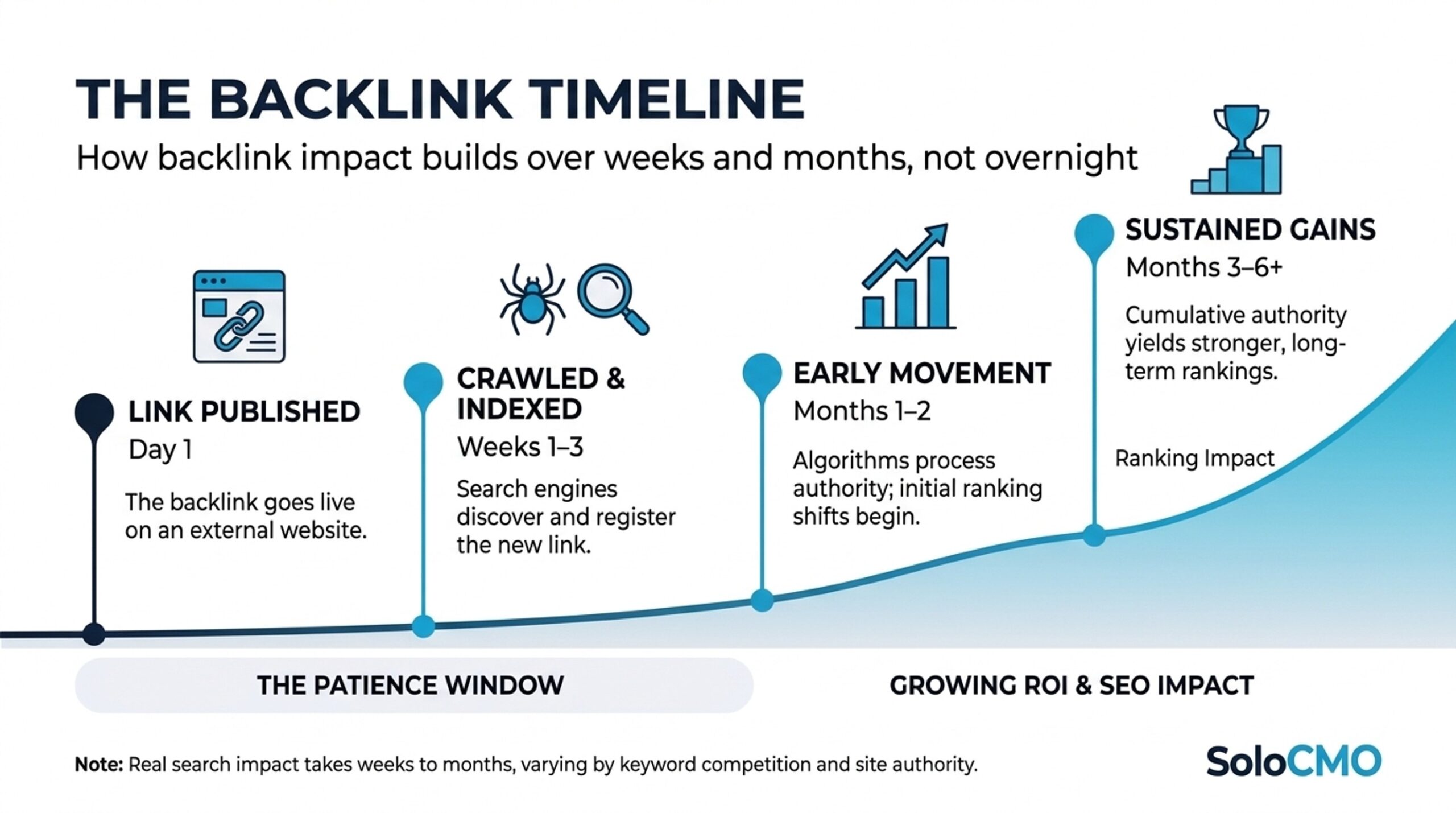
How Long Does It Take for Backlinks to Improve Search Rankings?
Plan on weeks to months, not days. Sources vary, and every figure here is a range, not a promise.
Typical Timeline From Link to Ranking Movement
Google may discover a new link within days to a few weeks, and early signs, such as small impression gains, often appear at four to eight weeks. Meaningful ranking movement commonly takes two to four months, and longer for competitive terms. Keyword competition, site age, content quality, and how quickly links arrive all stretch the timeline, though that slow payoff is normal for SEO as a whole.
What to Tell a Client at Day 30
When a client asks where the rankings are at 30 days, show leading indicators instead of ranking jumps. Share links earned, pages indexed, and impression growth in Google Search Console. A simple script works: “Month one builds the foundation. Here are the new backlinks, here is what Google has found, and here is when we expect the first ranking movement.” That honest framing builds trust and keeps the project from being judged too early.
How Do You Report Backlink Results to Clients?
Keep the report to one page and tie it to outcomes the client cares about. Three measures carry most of the story: new links gained, ranking movement on target pages, and organic conversions.
The One-Page Monthly Report Template
| Metric | Baseline | This Month | Change | Note |
|---|---|---|---|---|
| New linking sites gained | Date each link went live | |||
| Target-page ranking (Search Console) | Position for primary query | |||
| Impressions and clicks to target pages | ||||
| Organic conversions | From analytics |
Annotate the date each link goes live so the client can see cause and timing. Over time, better search visibility on target pages is the evidence that the plan is working, and a shared spreadsheet or online dashboard makes it easy for clients to check between calls.
Metrics to Skip and Why
Skip raw link counts, domain-authority growth on its own, and traffic to unrelated pages, since they look good yet prove little. Be honest that backlinks are one input among several, so show correlation, not claims of cause. Strong outcomes can later become client case studies, which also serve as link magnets, and publishing that content online gives other sites something concrete to cite. Reporting is also where tooling saves time, since assembling this each month is a repetitive task.
Conclusion
Prioritizing links comes down to a repeatable sequence: audit the profile, find the gap, choose target pages, sort by tier, score every opportunity, and follow a 90-day build order. Avoid risky links, and report on outcomes the client values. The method works because it is consistent, not because it is clever, and order beats volume every time.
If you are ready to turn this into a plan for your own clients, the next move is simple: pick one client, pull the Search Console Links report, and score your first ten prospects this week. If you would rather have help scoping a prioritized link plan, or tooling that multiplies your output as a team of one, you can Get Estimate and we will talk through what fits your client load.
FAQ
What backlinks should I build first for a new website?
New websites should start with quick wins: Google Business Profile, relevant citations, niche directories, and unlinked brand mentions. These links are low-risk and easy to land, and they establish a baseline. Build them first, then move to resource pages and outreach once the site has content worth linking to, so your online presence grows on a solid footing.
How do I decide which pages to build backlinks to?
Choose pages by value and opportunity. Prioritize pages ranking in positions 4 to 15 in Google Search Console, then linkable assets like cornerstone content, then money pages through internal links. Pages with real impressions and clear conversion value return the most from additional backlinks.
What makes a backlink high quality?
A high-quality backlink comes from a topically relevant site, sits within editorial content, and earns real traffic, while also carrying low spam risk. Authority metrics such as DR or DA help you filter prospects, but relevance and editorial placement matter more, and a few quality backlinks outweigh dozens of thin ones.
How many backlinks do I need to rank on page one?
There is no fixed number. Compare the unique linking sites pointing to your page against those pointing to the pages already ranking for the same query; the difference is your gap. Industry medians run into the hundreds of referring domains, but they vary widely, so treat any benchmark as a planning range.
Should I build links to my homepage or inner pages?
Build both, but weight inner pages for ranking goals. The homepage collects brand mentions and citations on its own, while inner pages need deliberate building links to rank for specific queries. Send intentional outreach to the pages that match what you want to rank for.
How long does it take for backlinks to improve search rankings?
Plan on weeks to months. Google often discovers a new link within days to a few weeks, early signs such as impression gains appear around four to eight weeks, and meaningful search rankings movement commonly takes two to four months. Competitive terms and slow link velocity stretch that timeline.
Recent Posts
Content Refresh vs Rewrite: Which Fixes Decaying Blog Posts Faster
A content refresh ships faster, usually in 1 to 3 hours versus 4 to 8 for a rewrite, but a rewrite recovers faster when the decay stems from a search intent mismatch. The rule of thumb is to refresh the post if it still matches what searchers want and most of it is salvageable, and to rewrite it if the
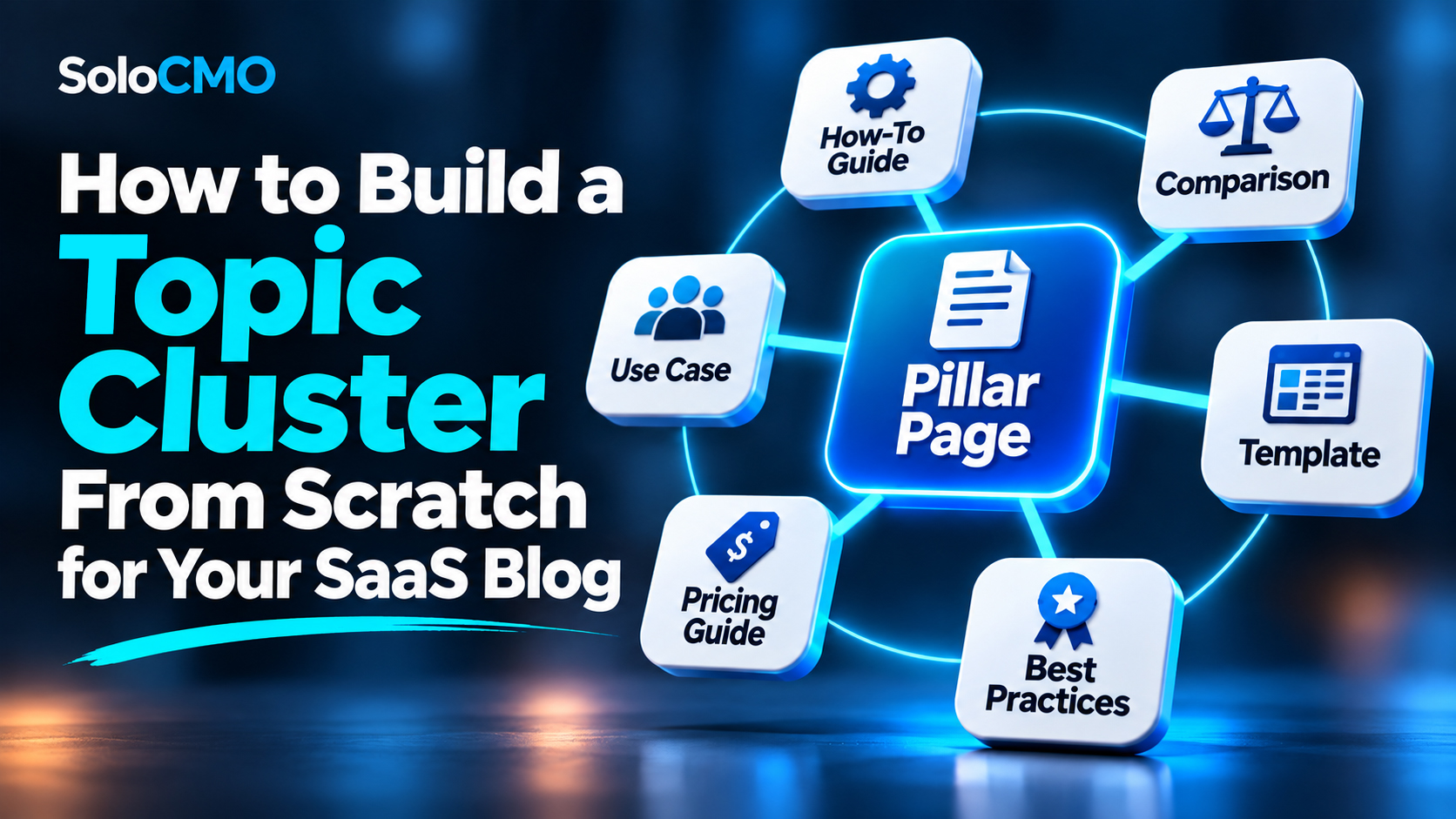
How to Build a Topic Cluster From Scratch for Your SaaS Blog
To build a topic cluster, pick a pillar topic that fits your product, collect subtopic keywords, group them by SERP overlap and intent, size the cluster, link every page to the pillar, publish in stages, then measure at cluster level. That is how to build a topic cluster in a way you can defend to a founder, and our topical authority
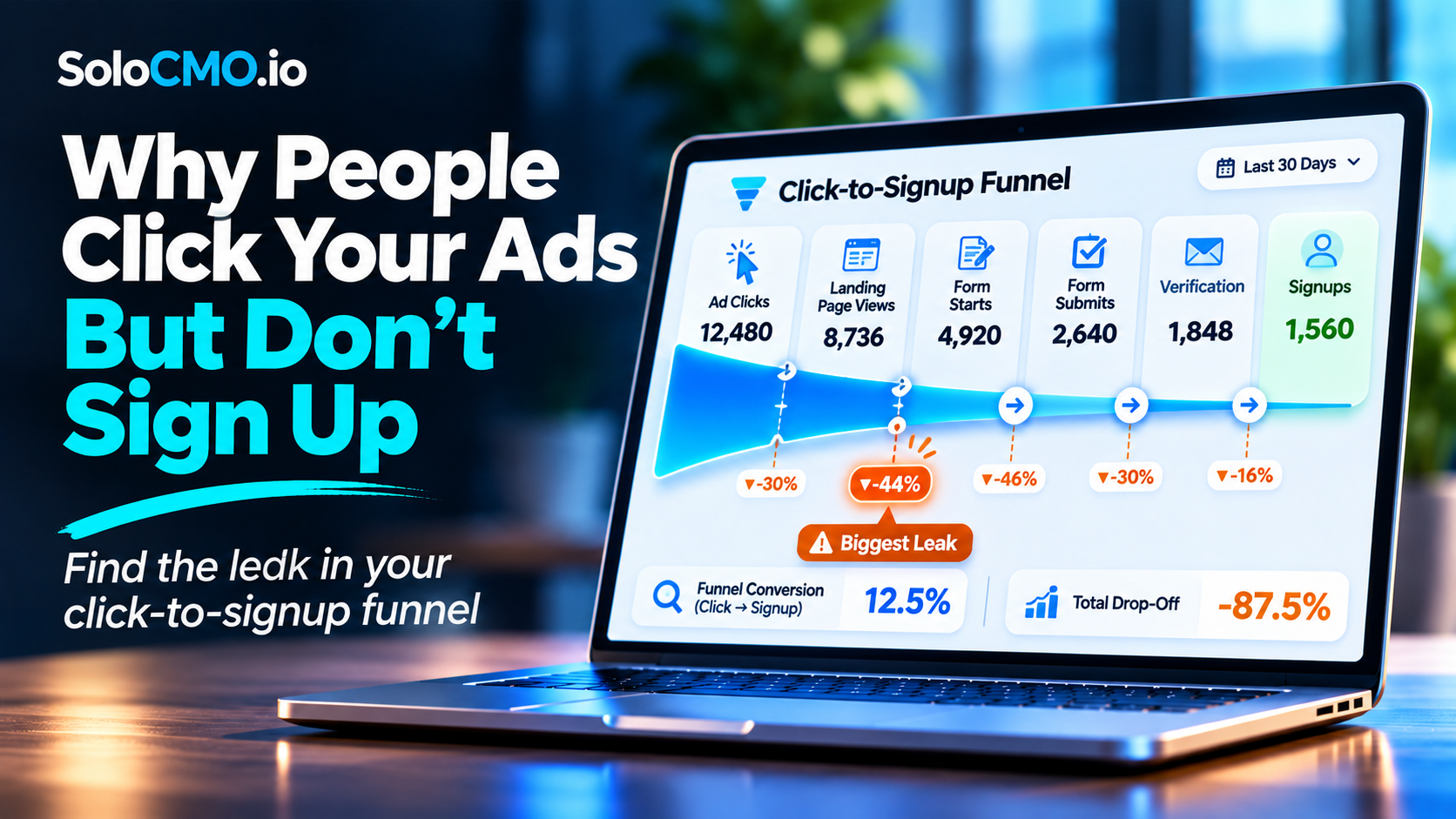
Where Leads Drop Off Between Ad Click and Signup
Funnel drop off between click and signup occurs at six points: the ad click, page load, above the fold, form start, form submit, and verification. The most significant leaks usually sit upstream, where the ad promise fails to match the page or where the page loads too slowly on mobile before the form ever appears. If your paid ad campaigns show
Get Smarter About Your Marketing
Practical SEO, AI, content, and marketing strategies you can put to work immediately.
Join the Newsletter